Project
Catan
A 3D Settlers of Catan for the browser, phones and tablets: play at one table with friends, learn against computer opponents with a coach, or play online in real time, with the 5–6 Players, Seafarers and Cities & Knights extensions all in.
A fan-made project, built to play with friends. It is not affiliated with, endorsed by or sponsored by CATAN GmbH or Catan Studio; Catan is a trademark of CATAN GmbH.
A 3D Settlers of Catan for the browser, phones and tablets: play at one table with friends, learn with a coach against computer opponents, or play online in real time. The base game and three extensions — 5–6 Players, Seafarers and Cities & Knights — are all in.
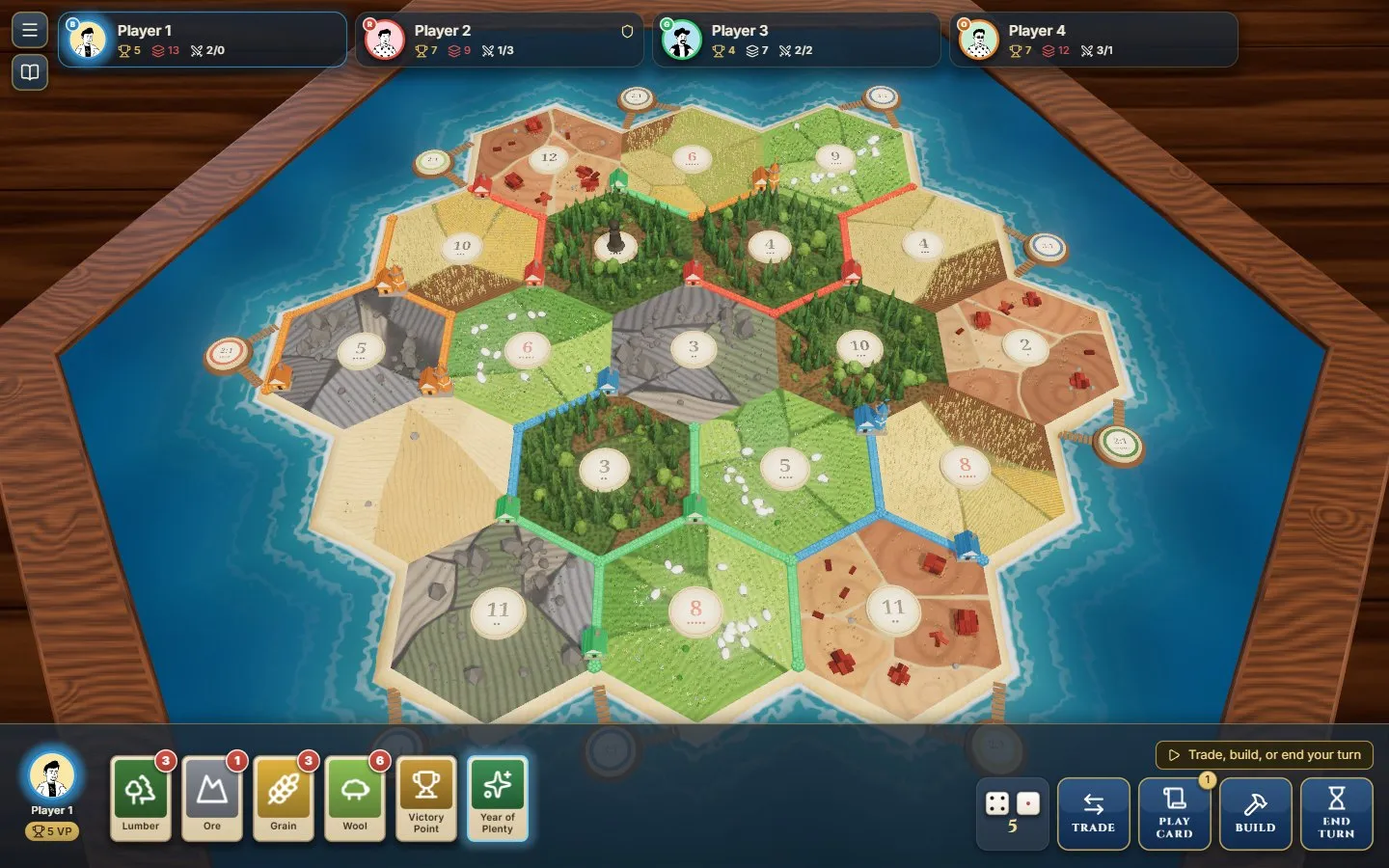
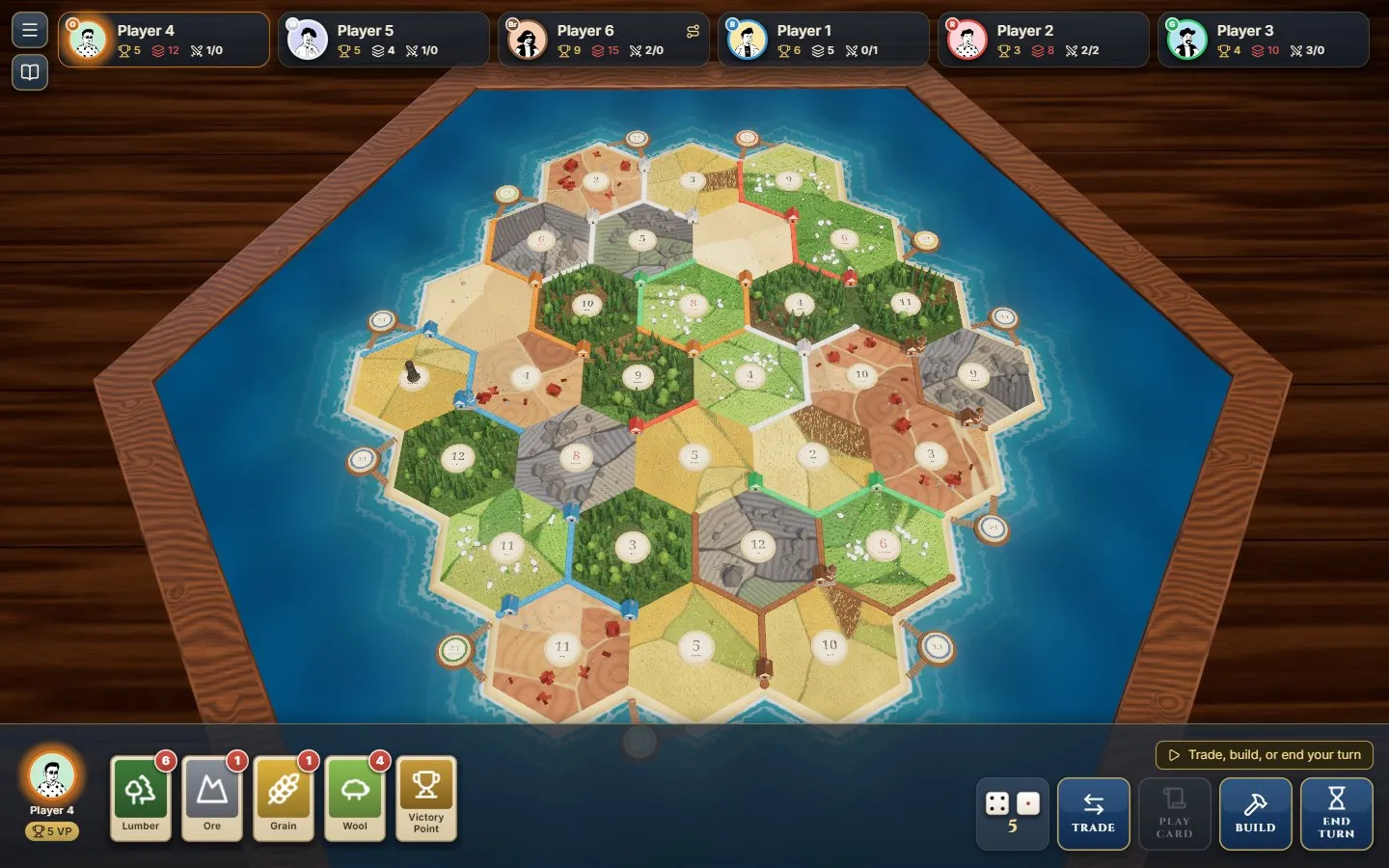
Every picture on this page was taken by playing the app.
At a glance
- A living 3D island. Forests of pines, wheat fields, grazing sheep, clay pits and mountains, on a wooden table; turn, tilt and zoom it with the mouse or your fingers.
- Every way to play. Hot-seat on one device, against the computer, a guided tutorial, or online lobbies where everyone plays from their own device. Any seat can be a computer player, locally or online, and a player can hand their seat to the computer mid-game and take it back. Computer players only know what a person in their seat would: their own hand, and counts of everyone else's.
- The full rules. Setup, trading with the bank, harbours and other players, the robber, development cards, longest road and largest army — and the extensions' ships, pirates, gold fields, knights, barbarians, commodities and progress cards.
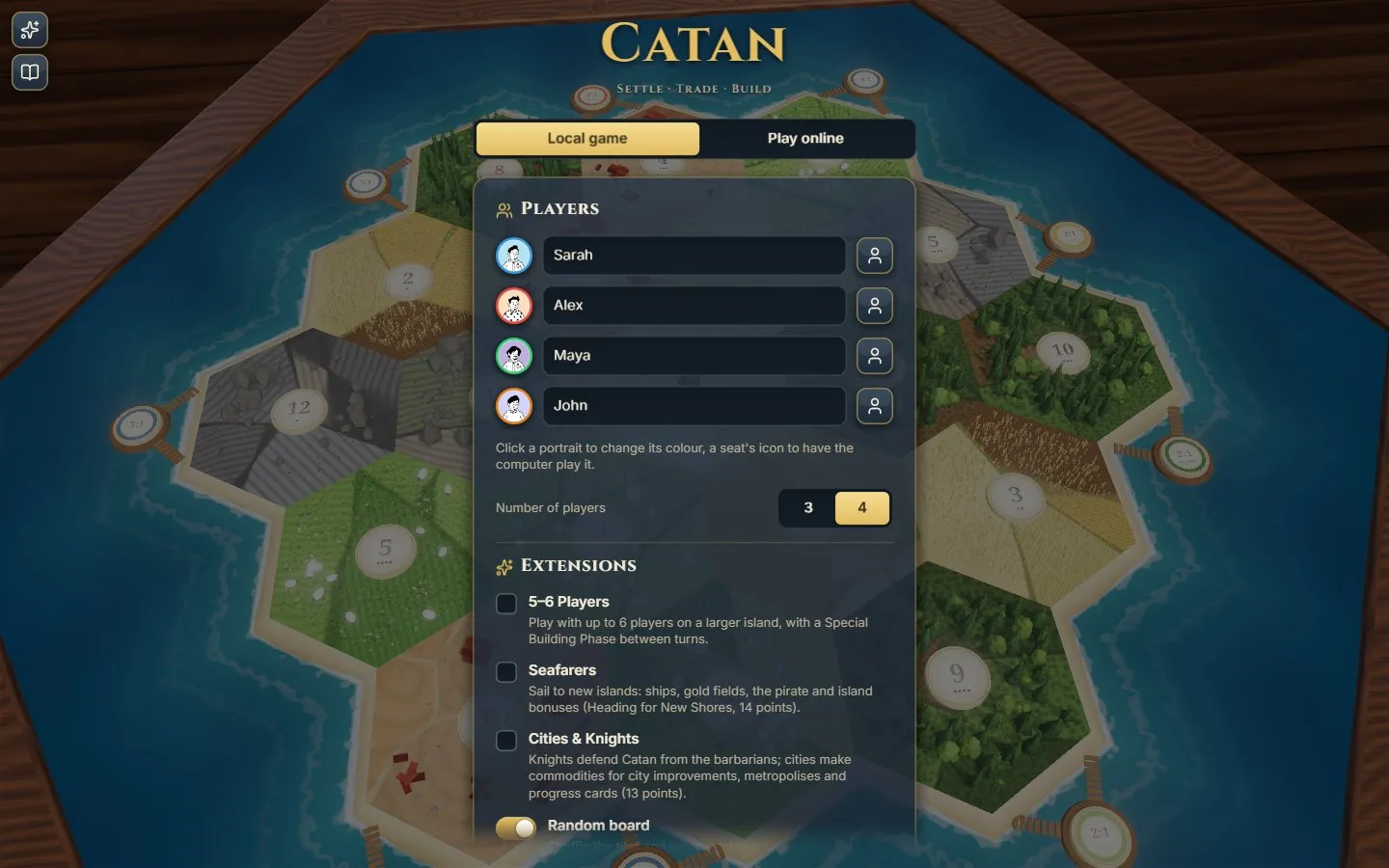
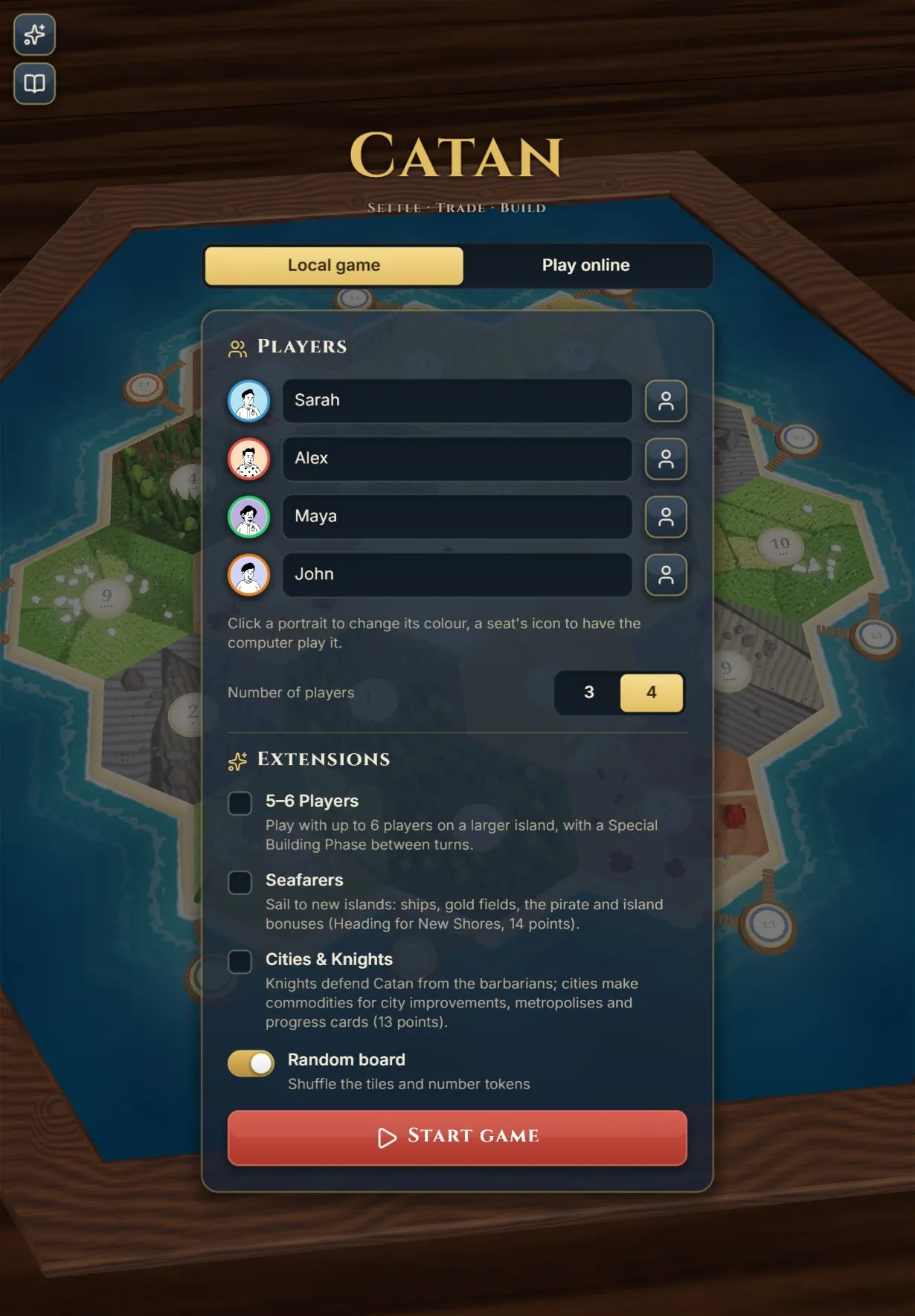
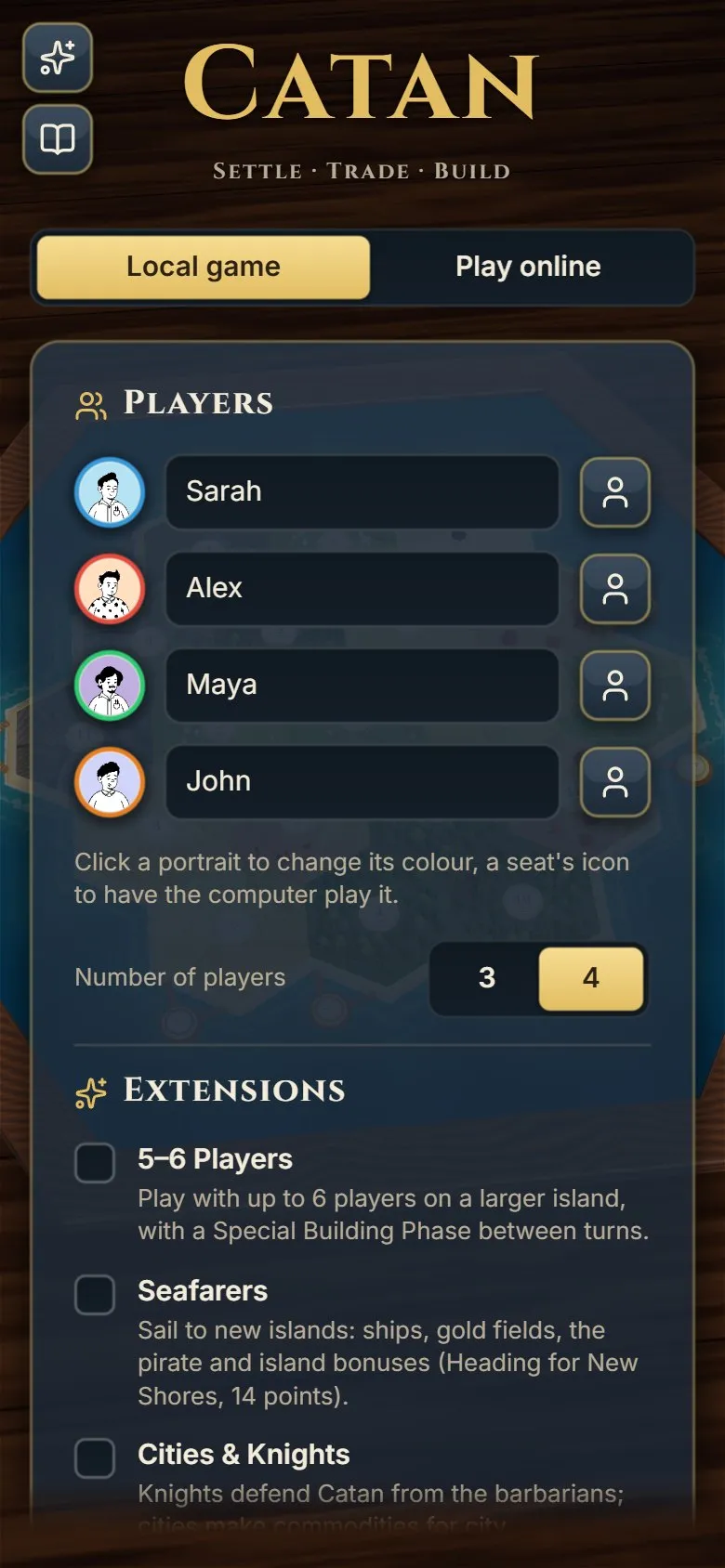
- Made for every screen. The same game on a 27" monitor, a tablet or a phone held either way; the layout rearranges itself for each.
- You see what the others do. When another player builds or moves the robber, the camera flies over to show you, then back to where you were looking.
- Installable. Add it to a home screen as an app (it's a progressive web app).
| Desktop | Tablet | Phone |
|---|---|---|
 |  |  |
Starting out
The home screen sets up a game on this device: name the players (three or four, up to six with the 5–6 Players extension), choose which seats the computer plays, pick the extensions and whether the board is shuffled. Play online leads to the lobbies; the buttons in the top-left corner open the tutorials and the rules.
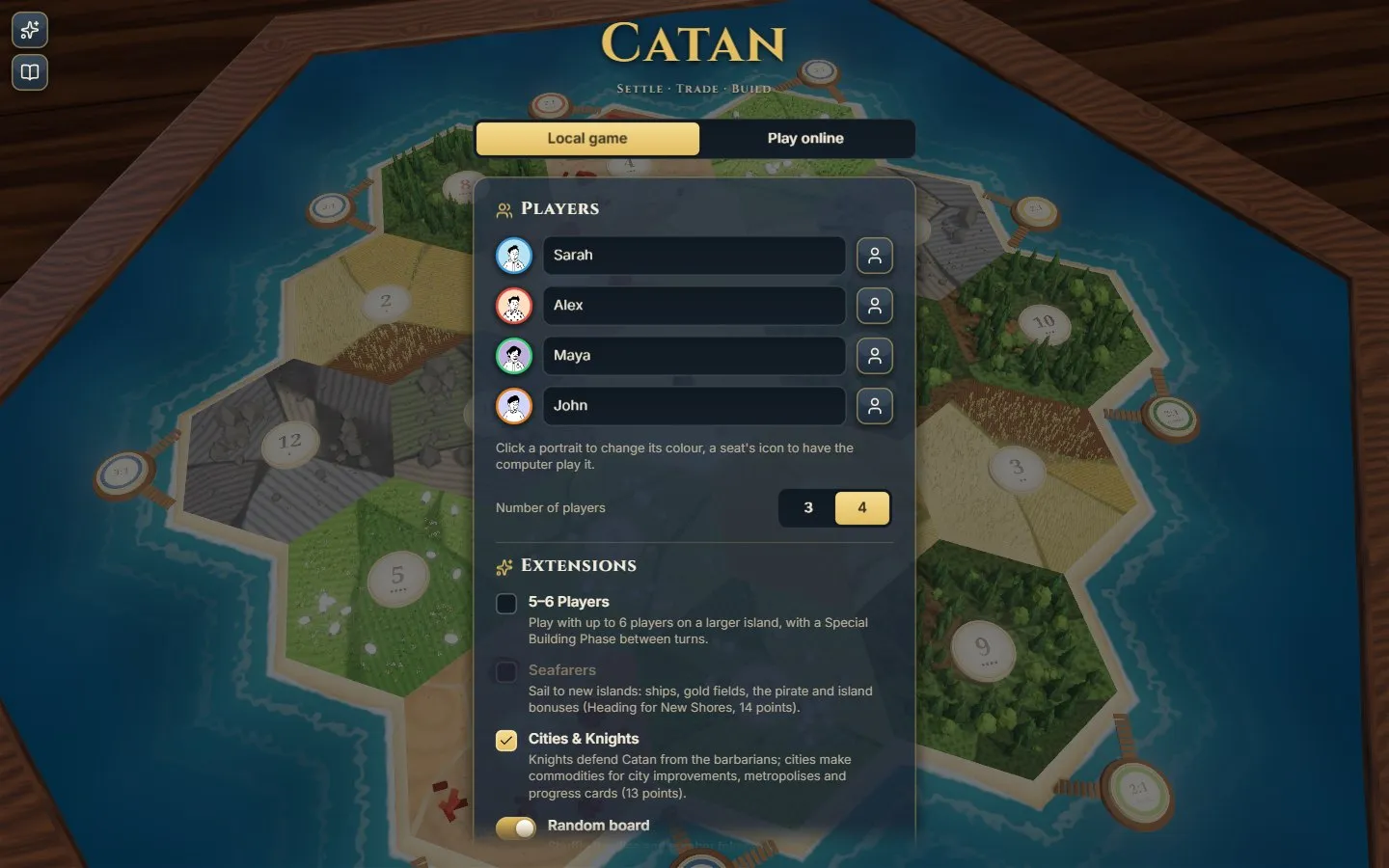 | 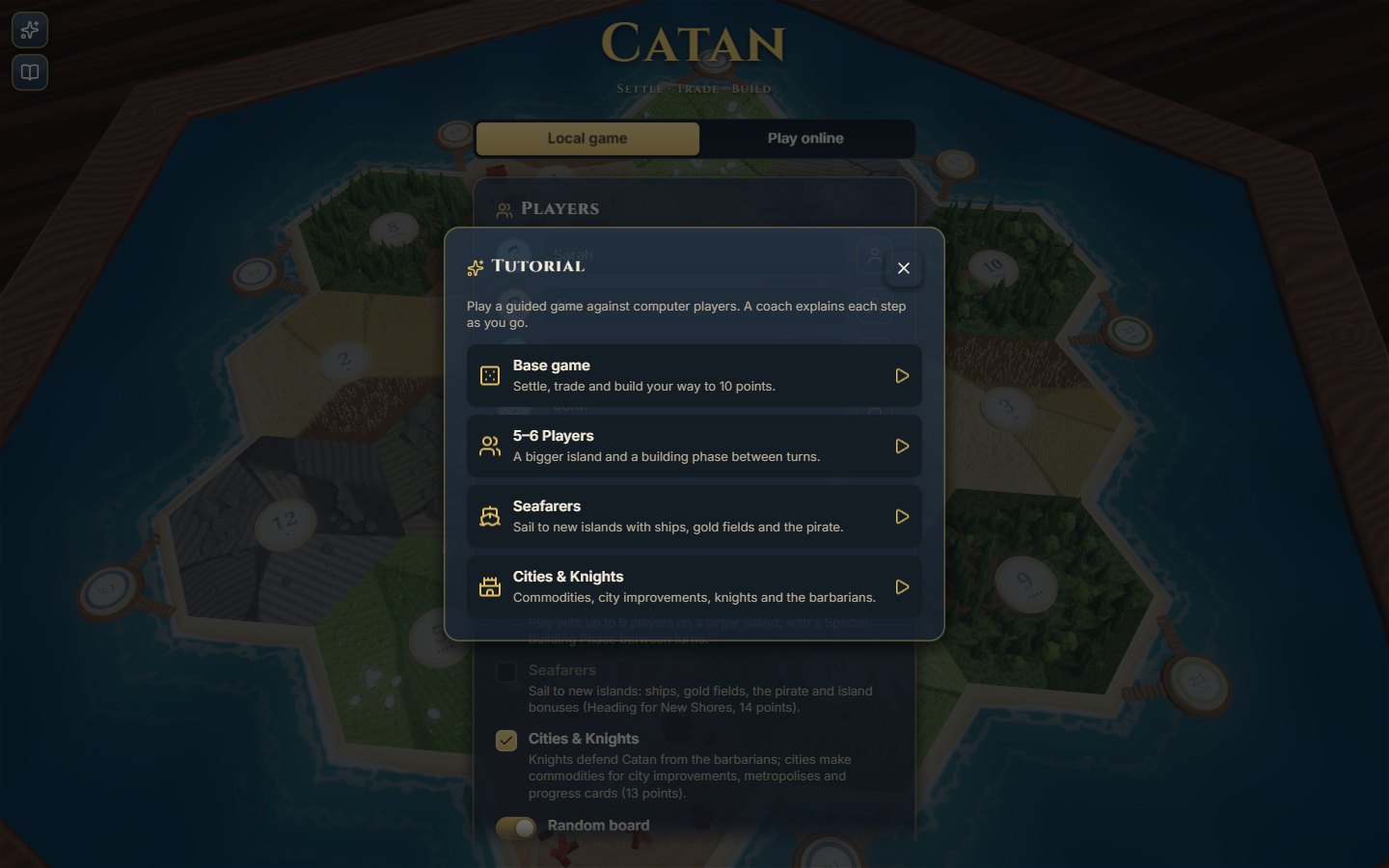 |
| A local game with Cities & Knights. Extensions that can't be combined grey each other out. | A tutorial for the base game and for each extension. |
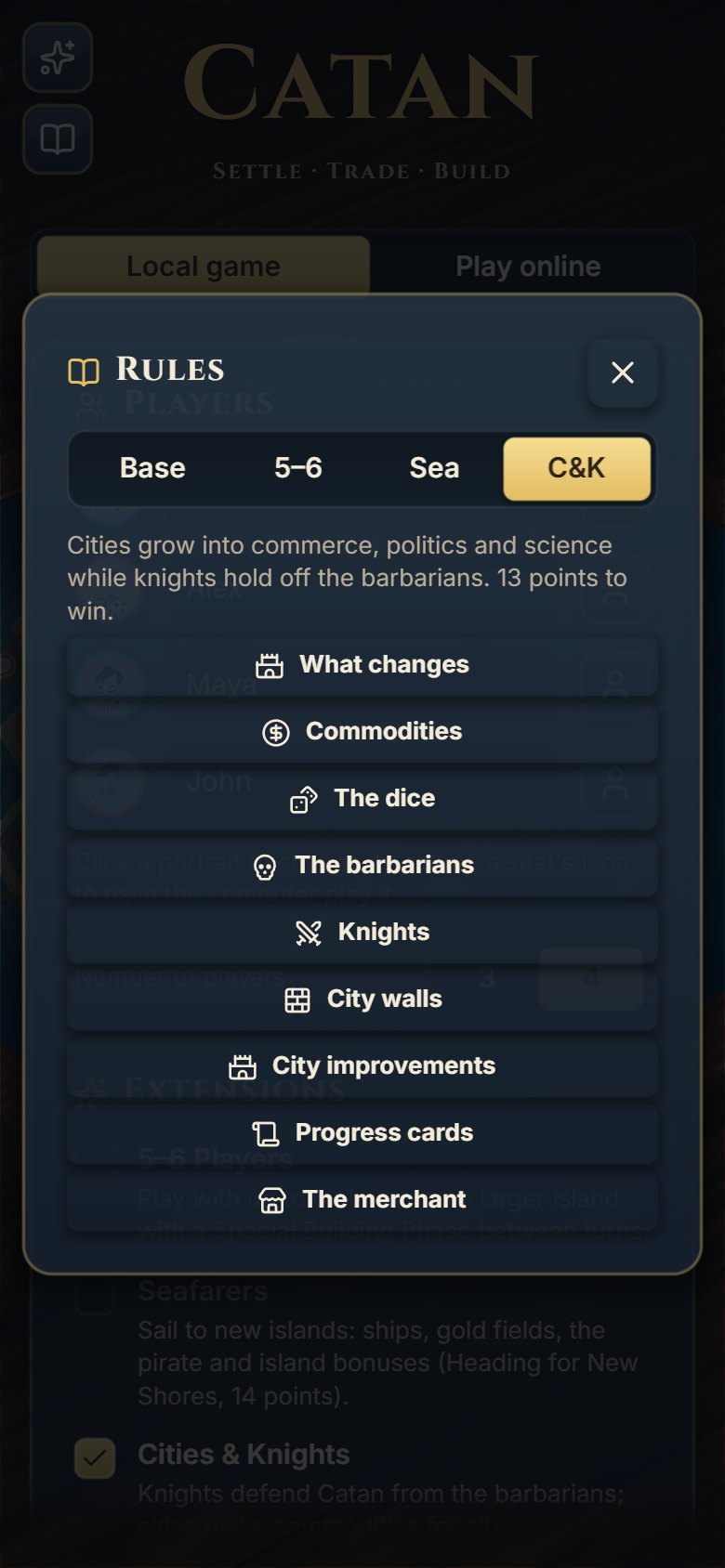
The rules book covers the base game and each extension, a section at a time — the same book is a tap away during a game.
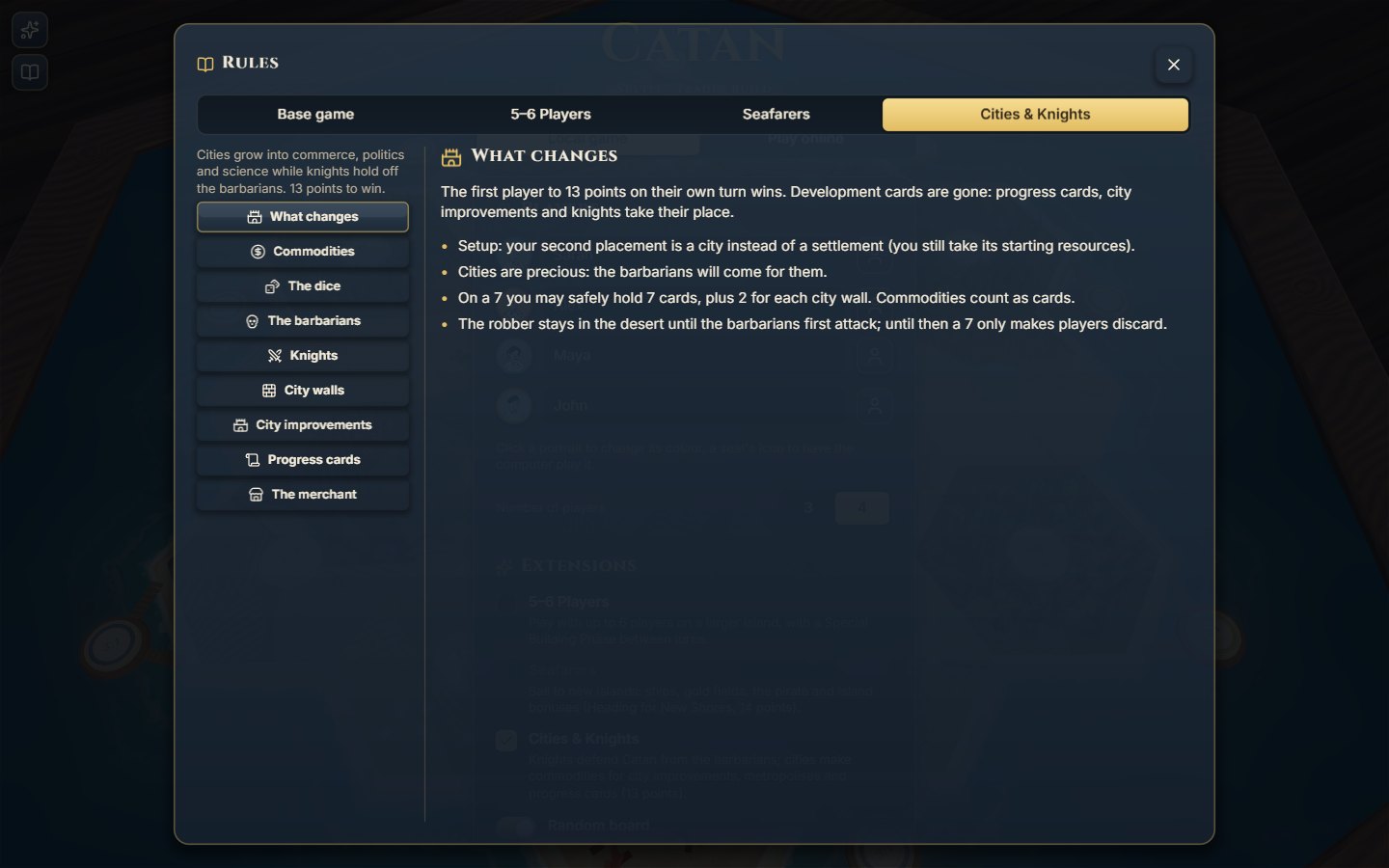 | 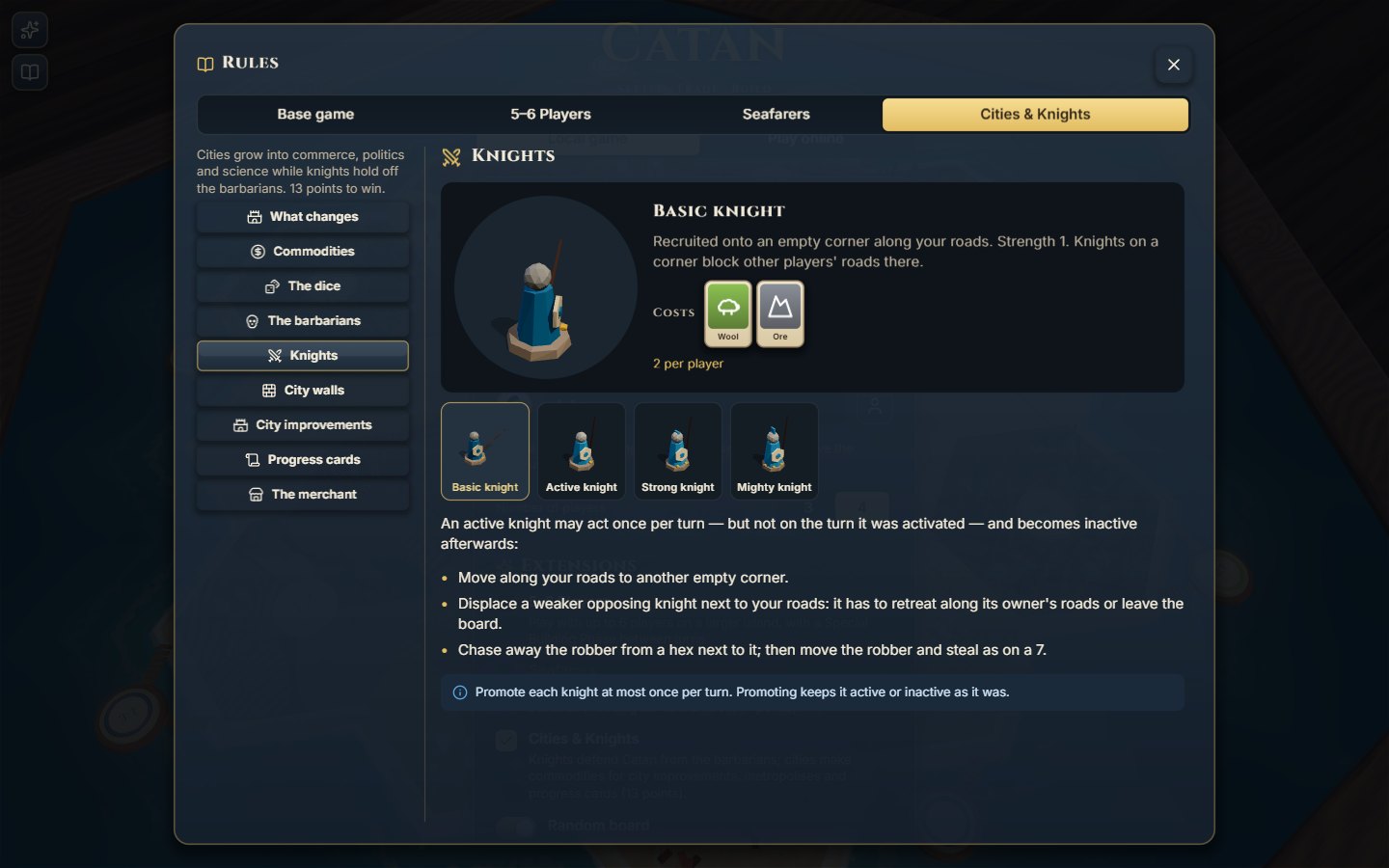 |
A game, turn by turn
These pictures follow one tutorial game against three computer players.
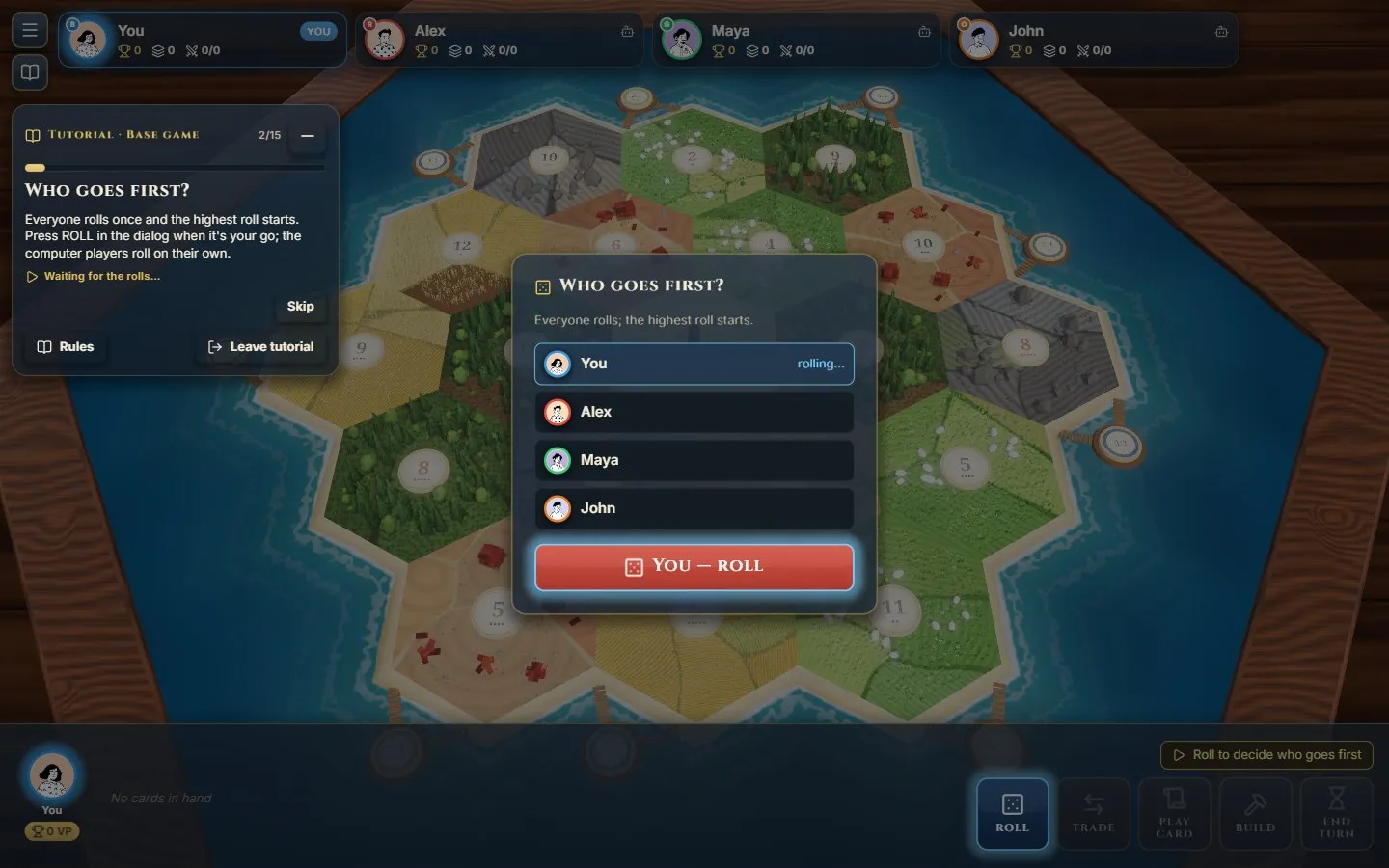
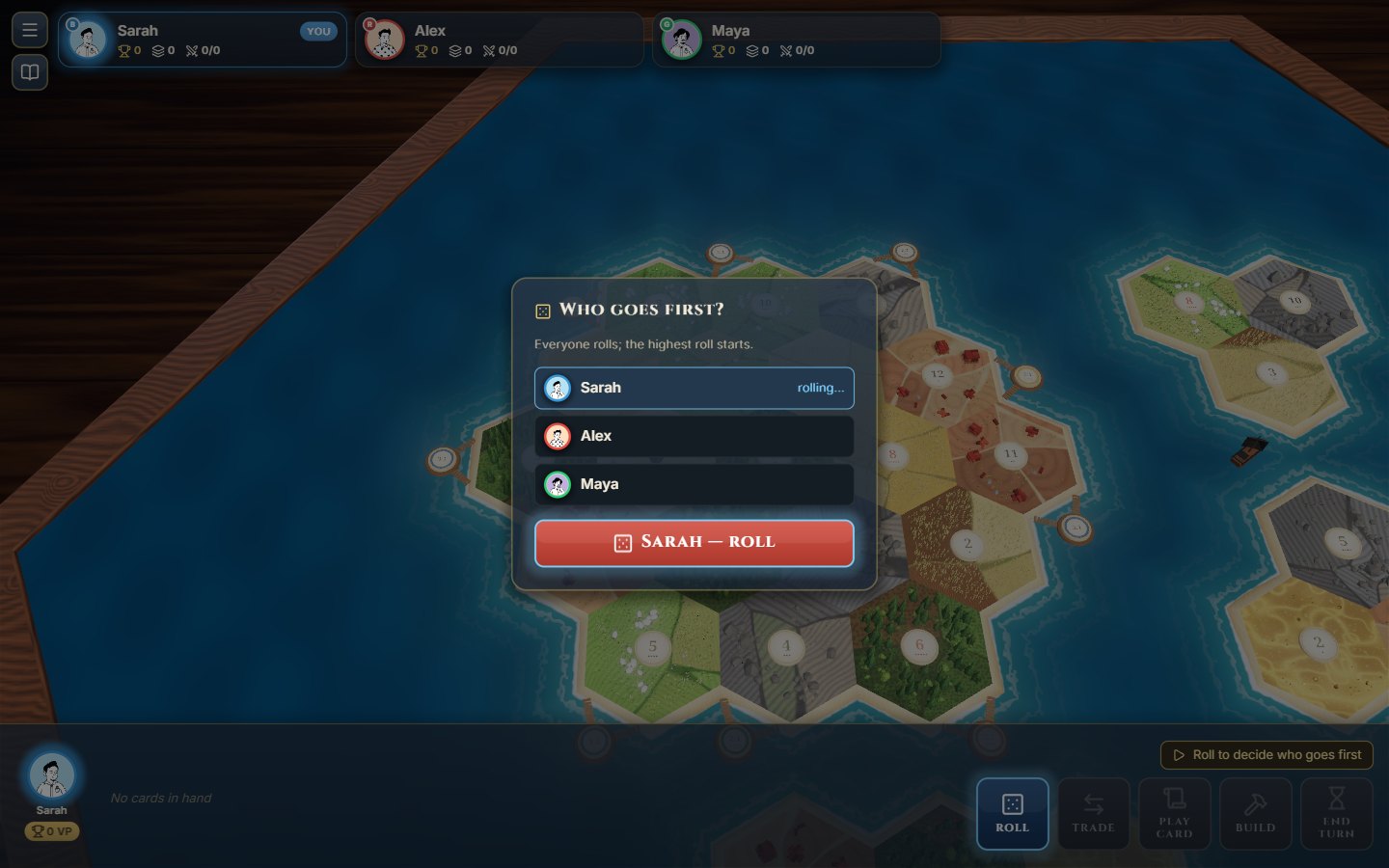
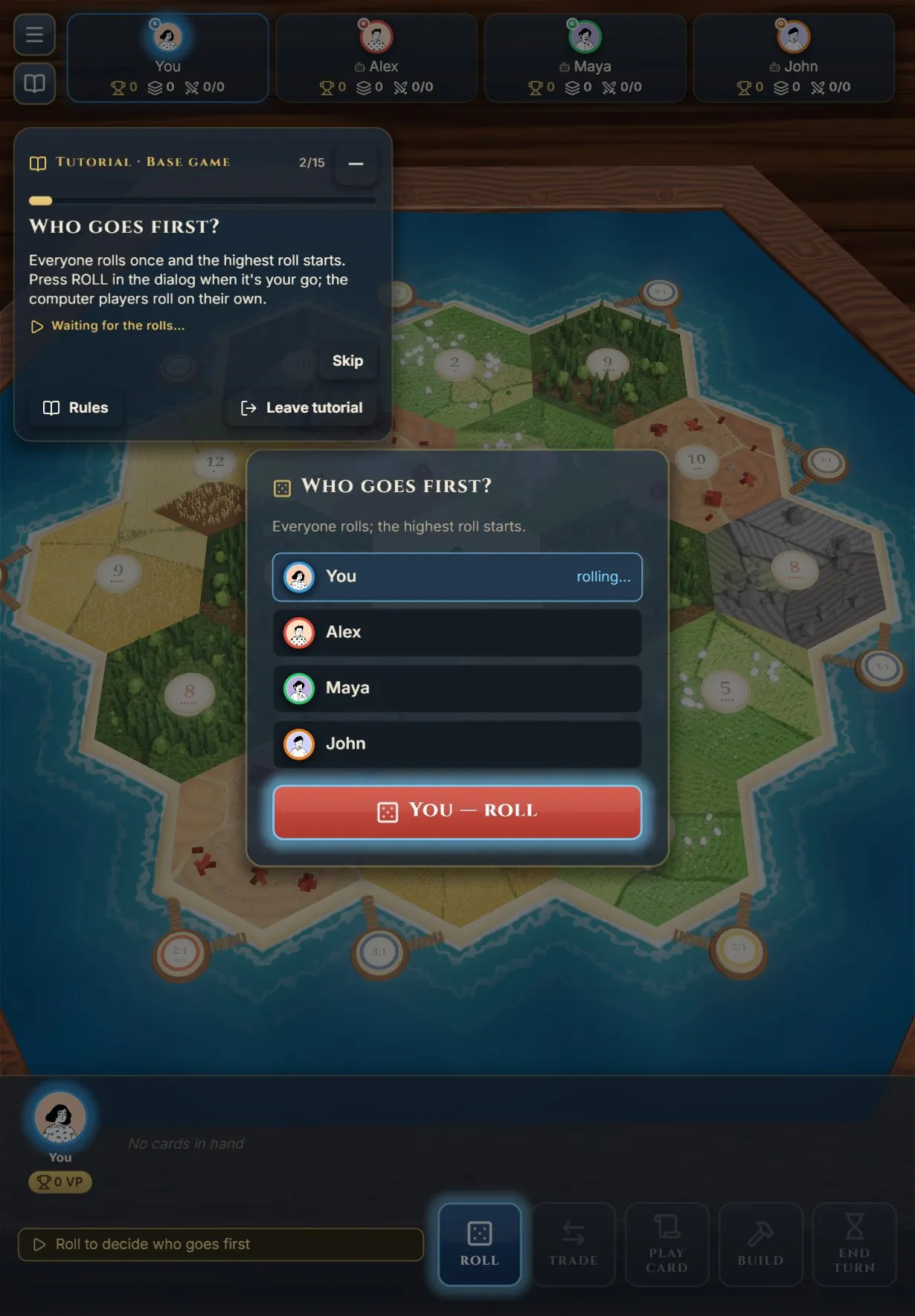
Who goes first. Everyone rolls; the highest roll starts. The coach (top left) explains each step of the tutorial as it comes up.
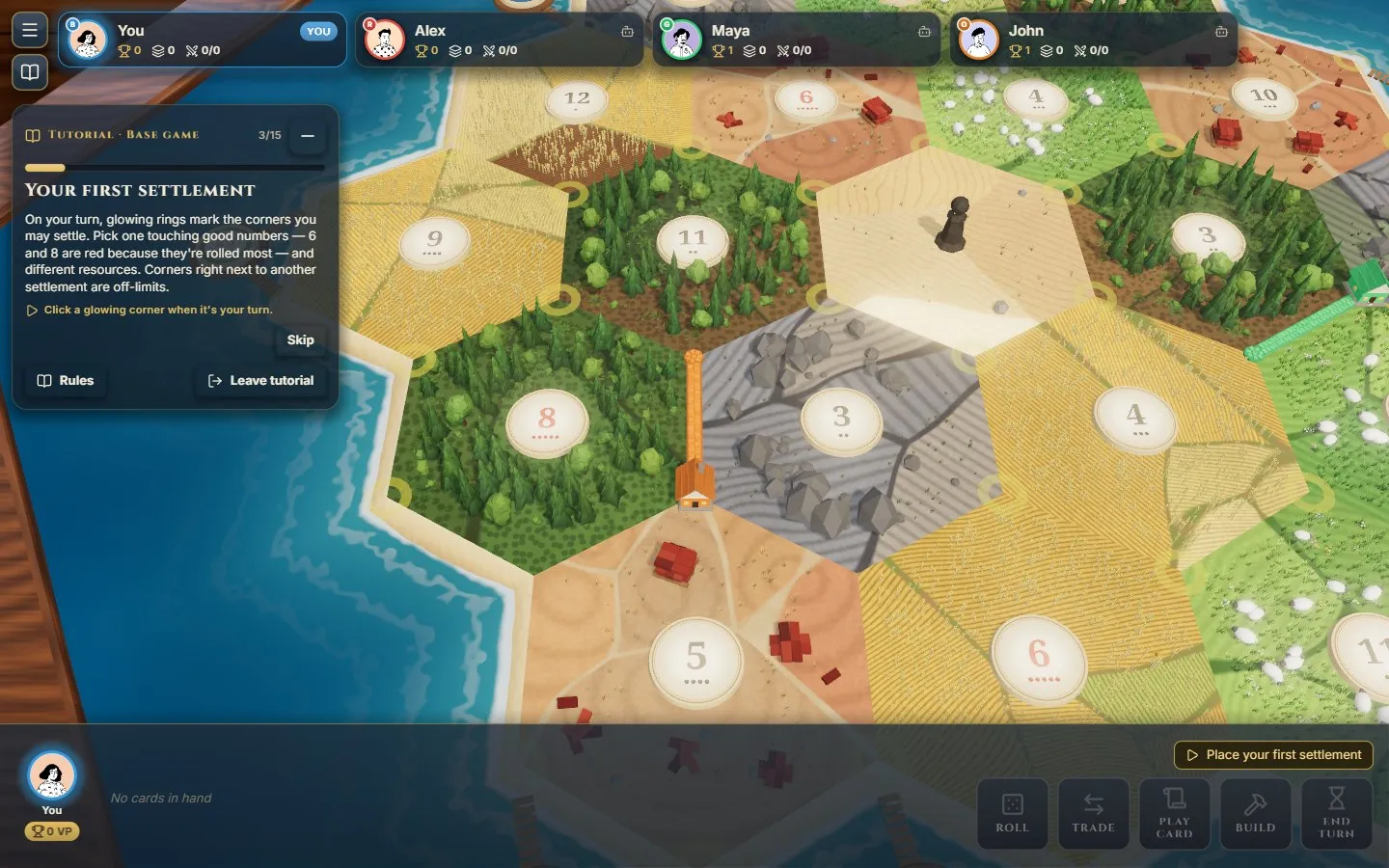
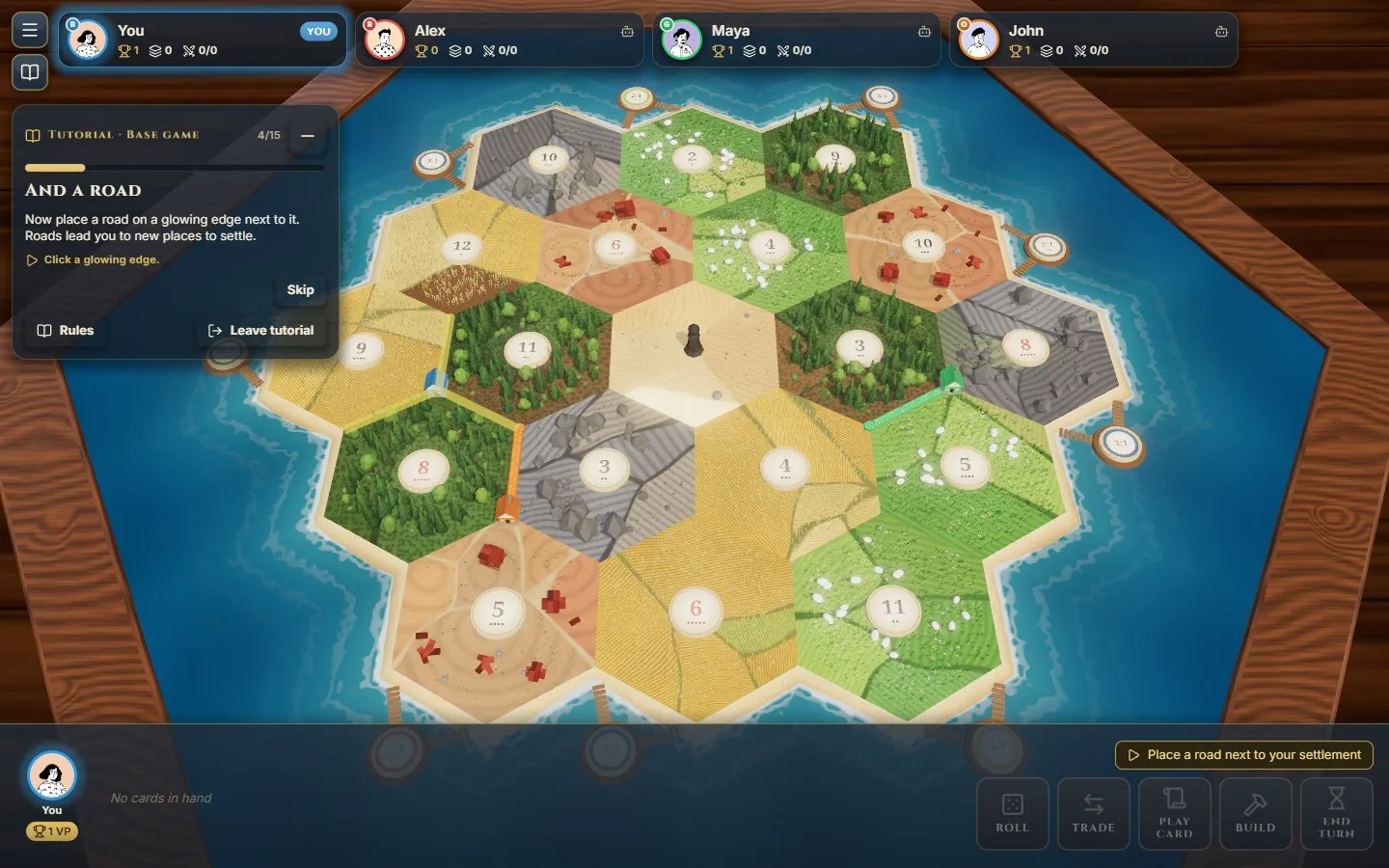
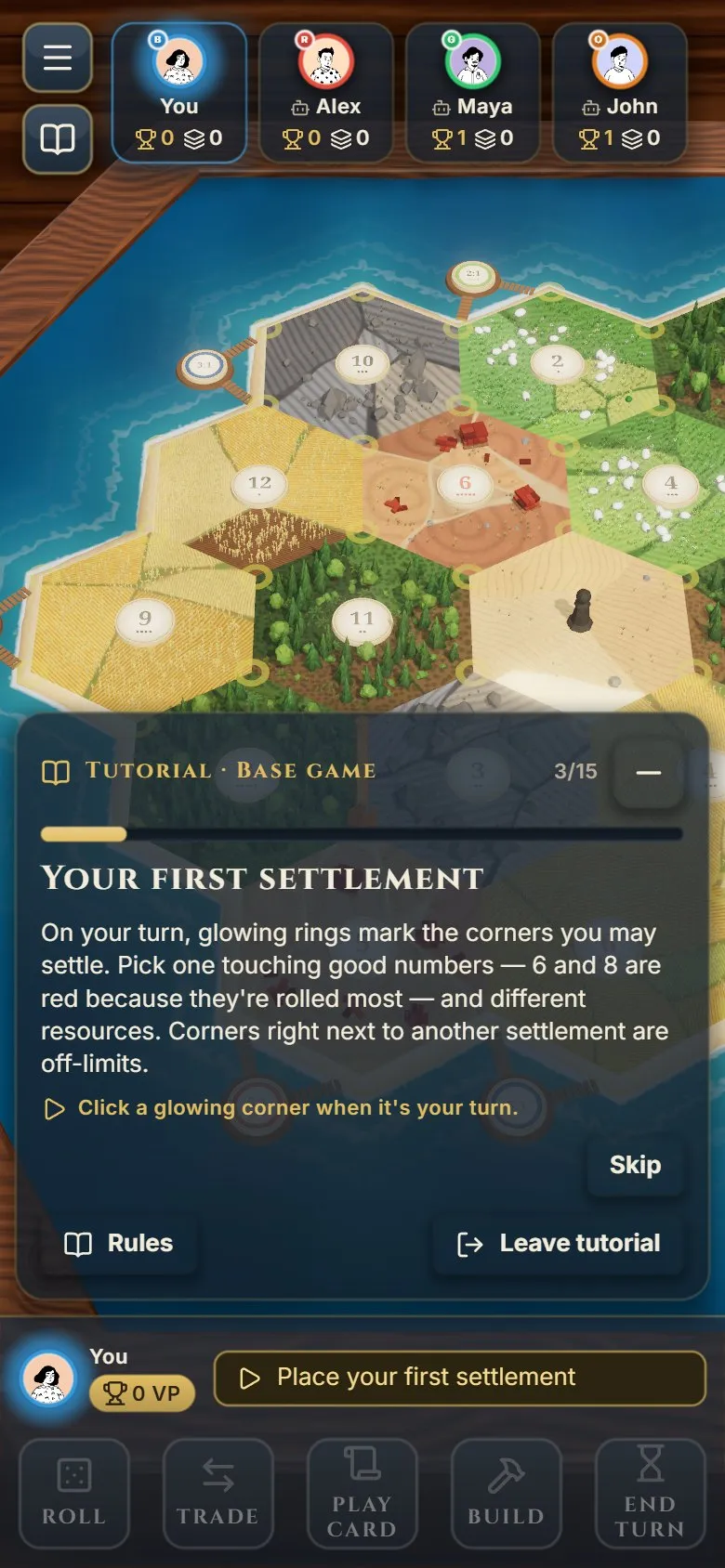
Setup. Each player places two settlements, each with a road. Glowing rings mark every corner you may settle — only valid spots light up, and only they respond to the pointer.
 |  |
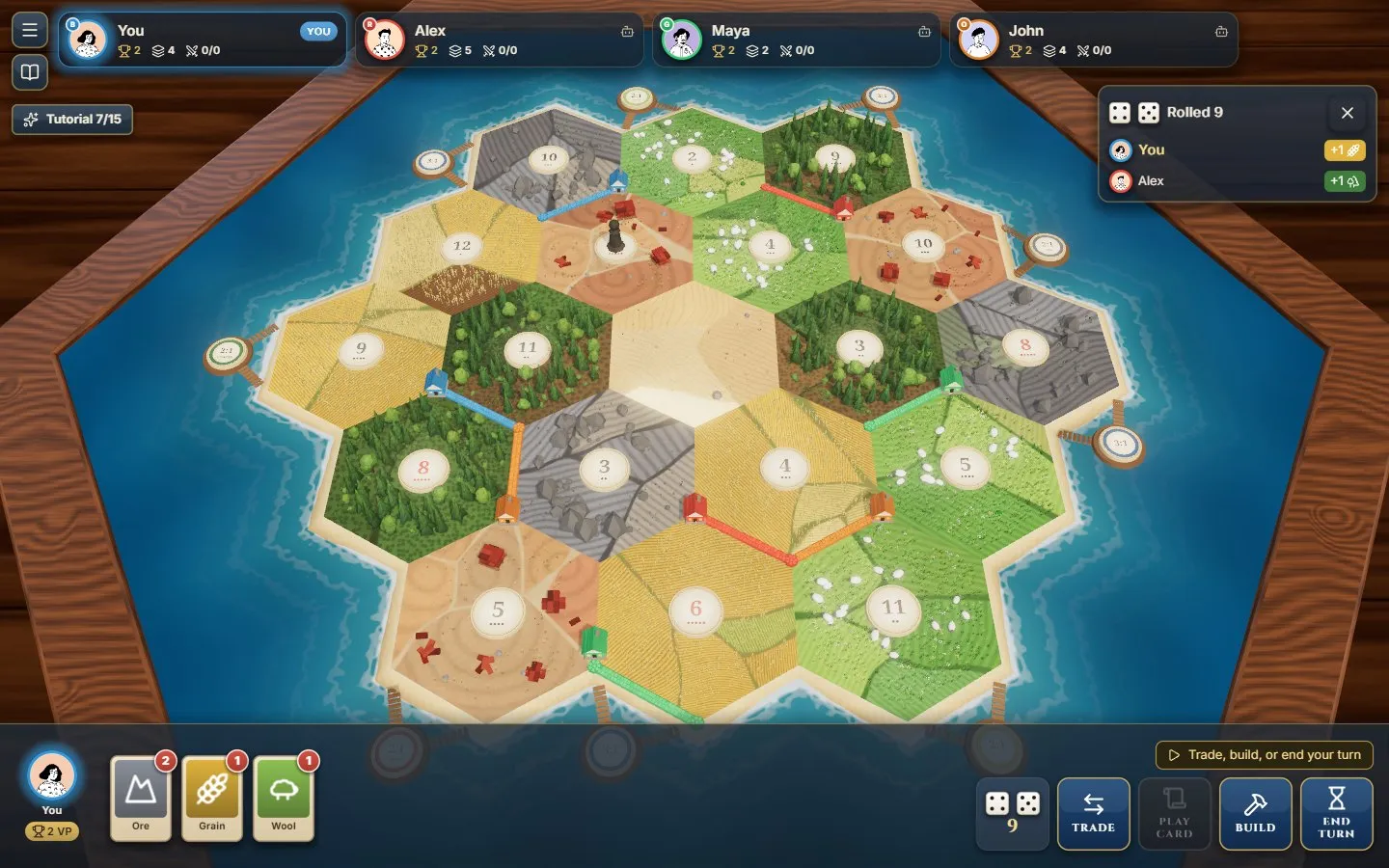
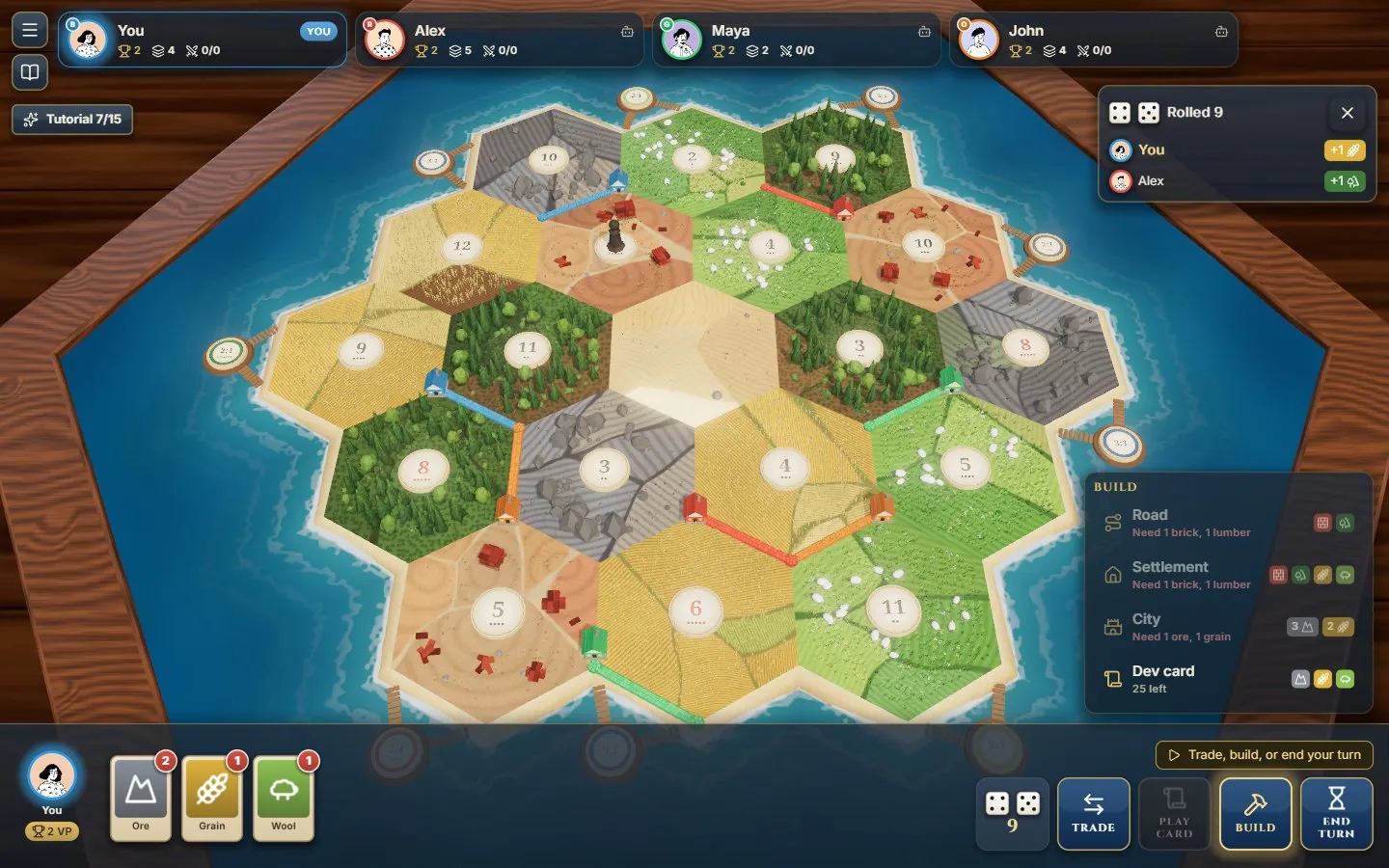
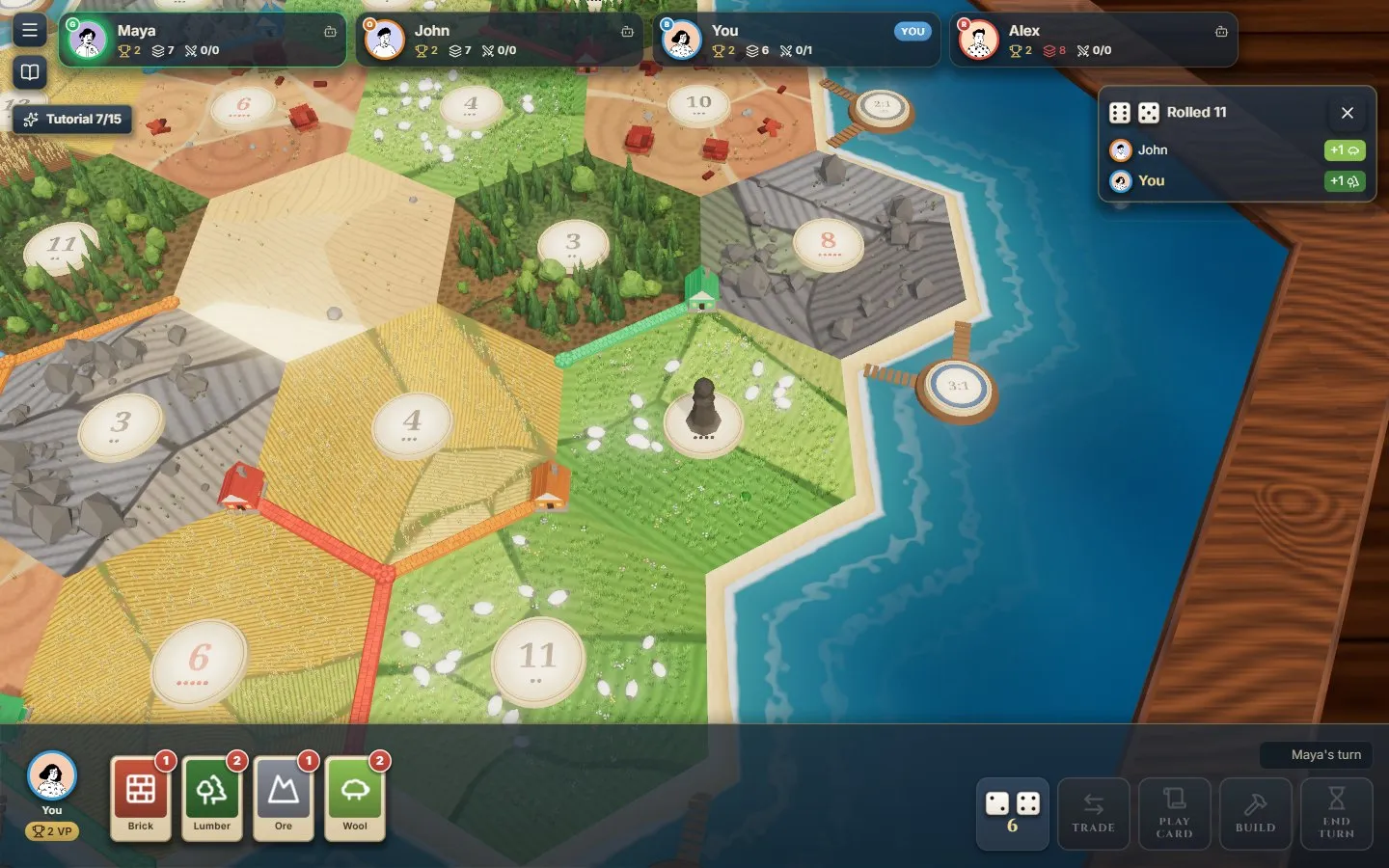
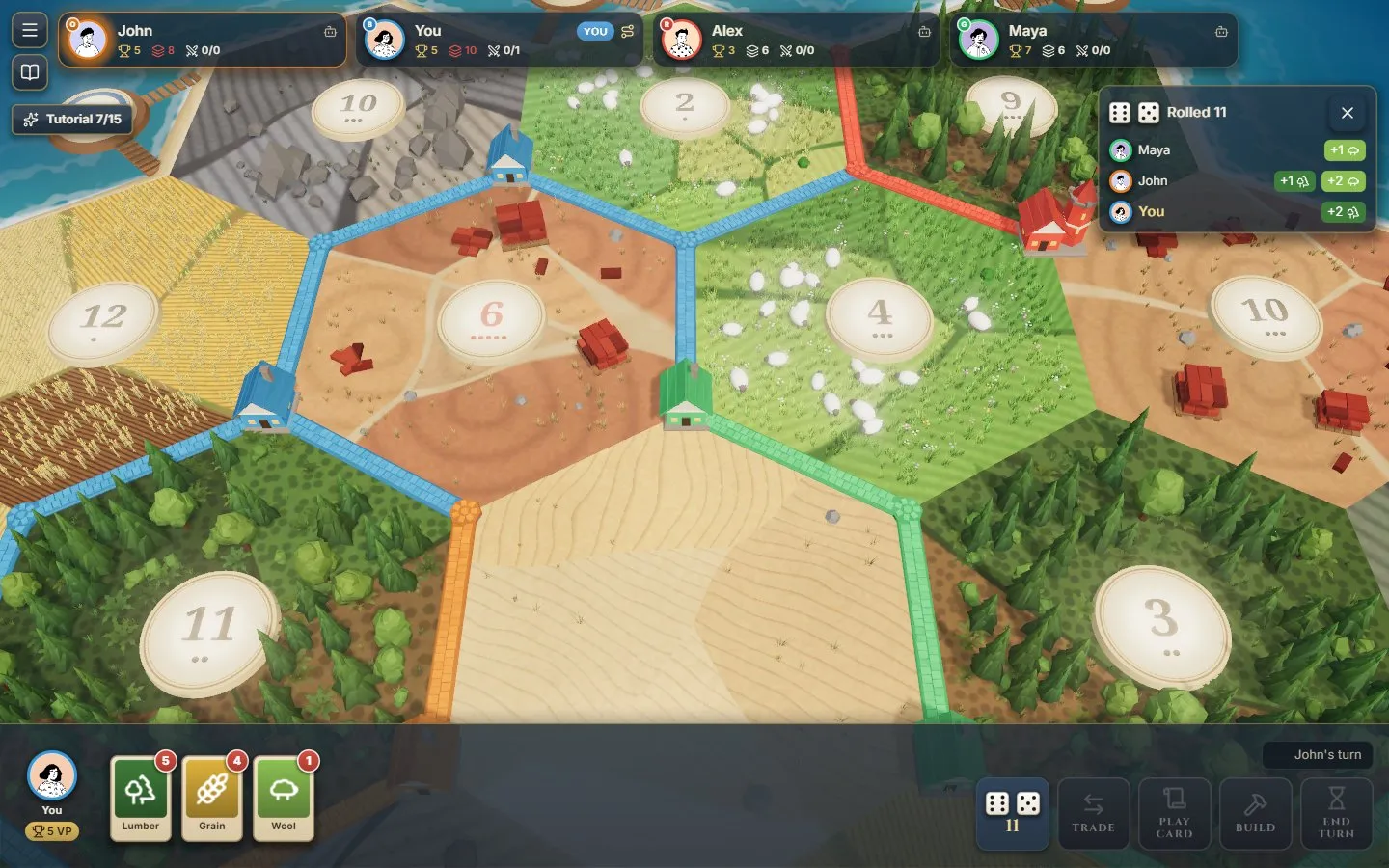
Rolling and producing. Roll, and every tile showing that number produces for the settlements and cities around it. A panel sums up who got what.
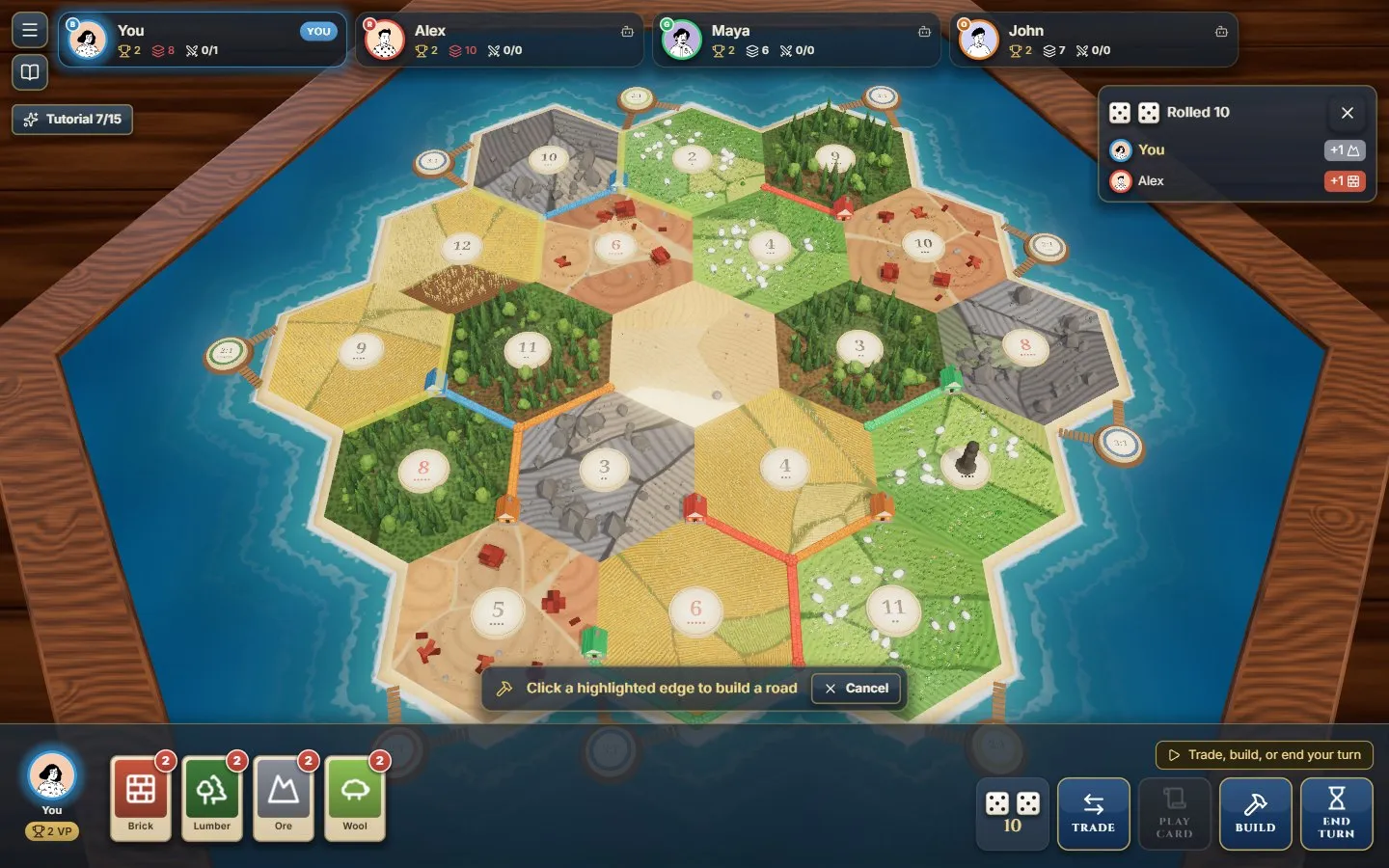
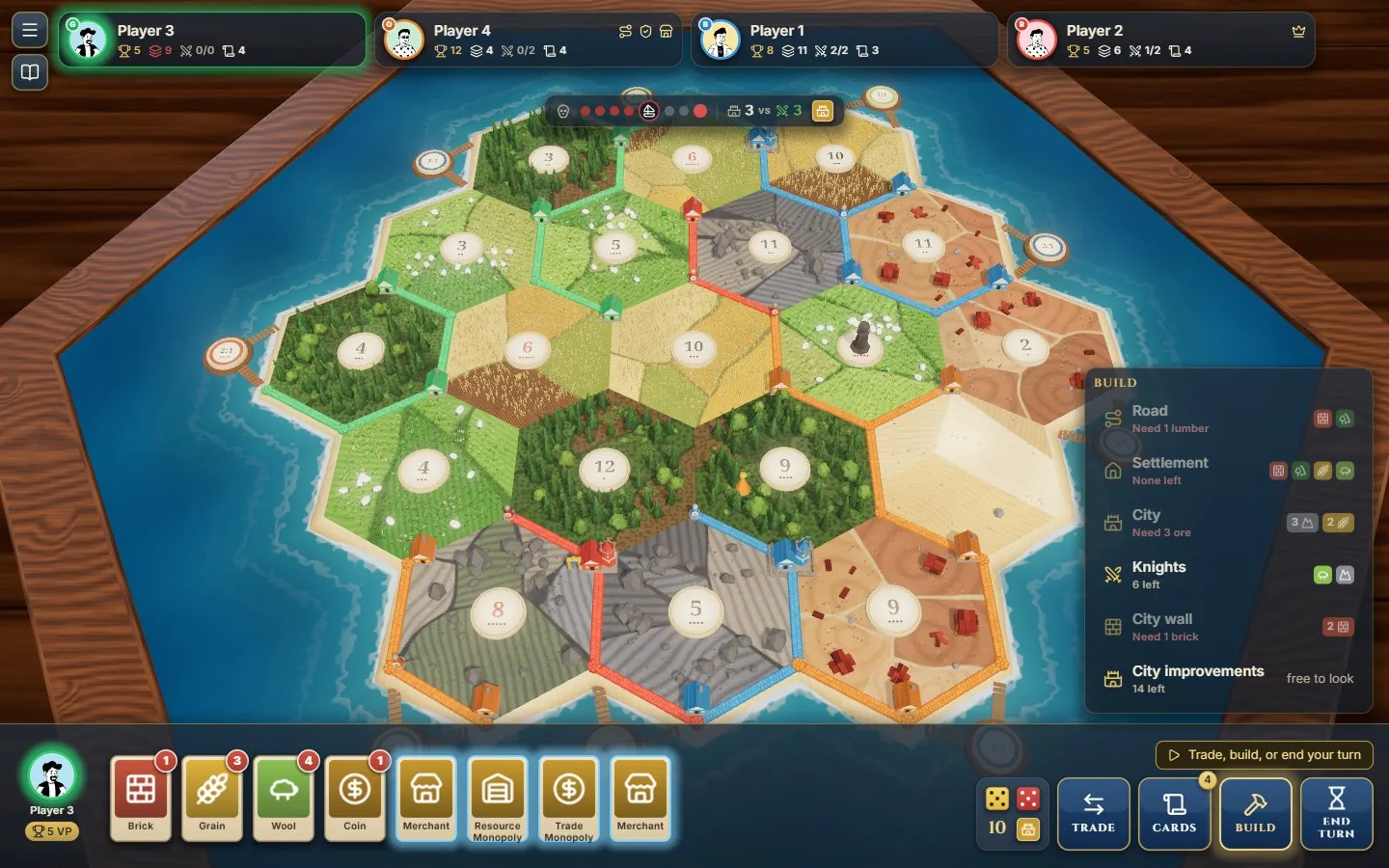
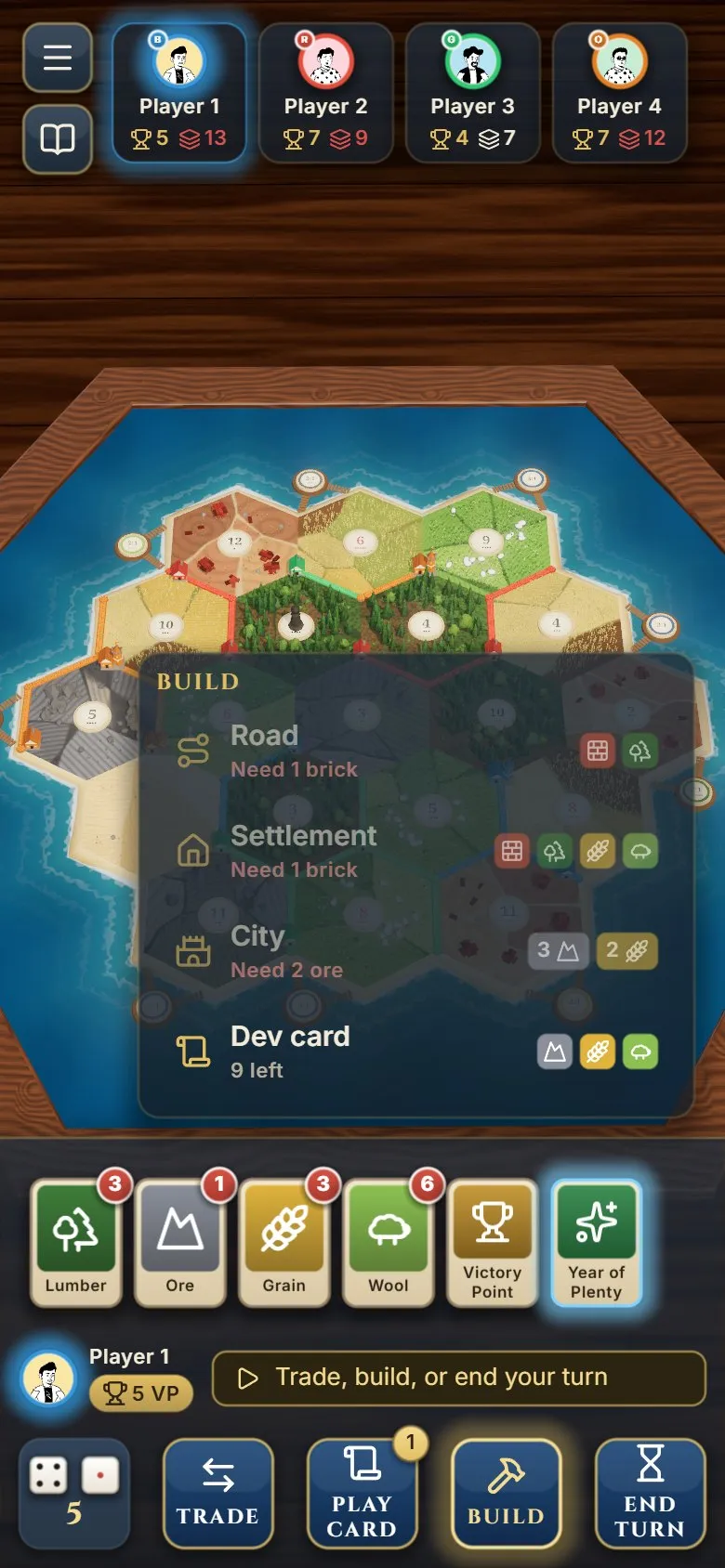
Building. The build menu shows what each piece costs, how many you have left and what you're missing. Choose one and the board lights up where it can go.
 |  |
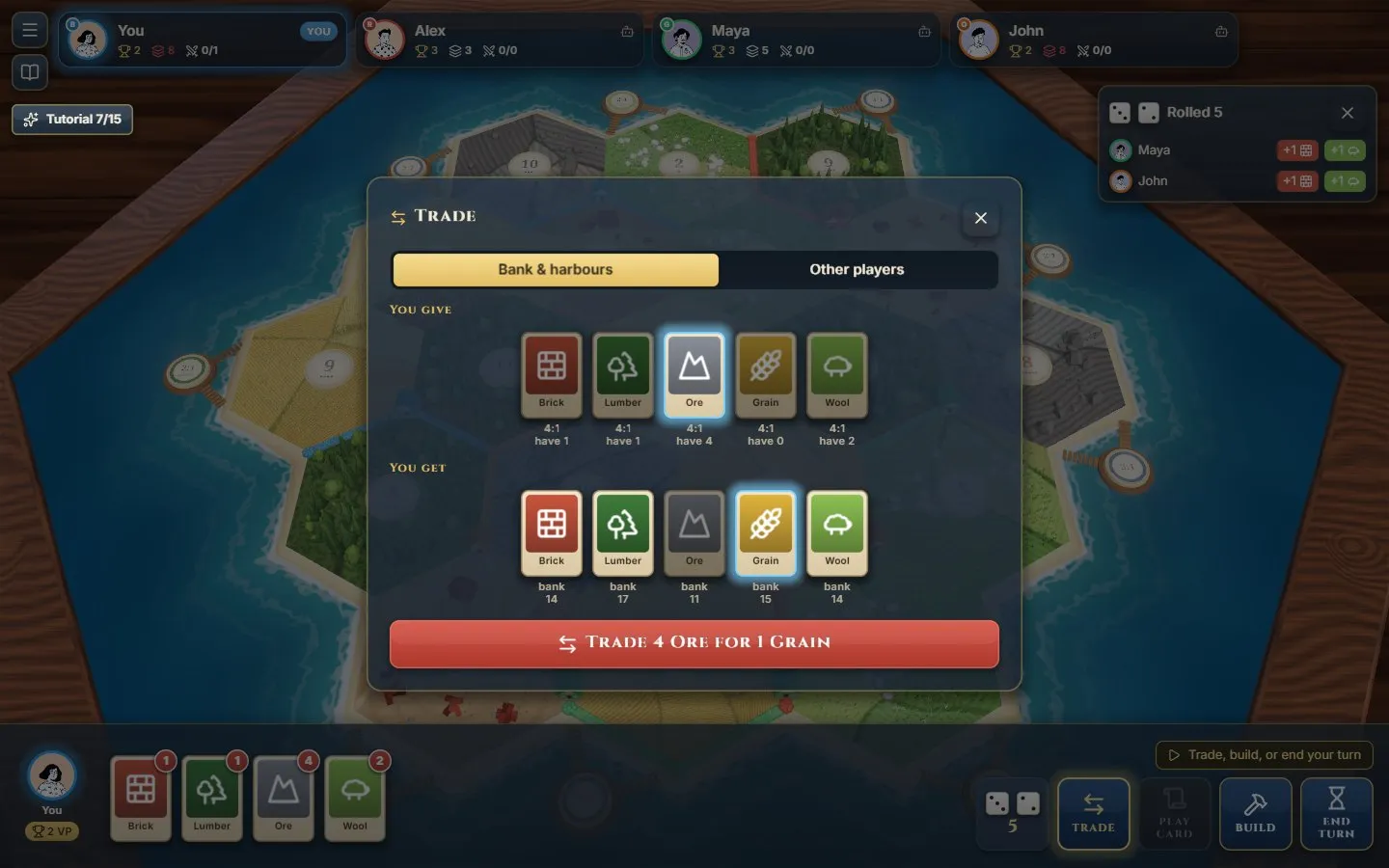
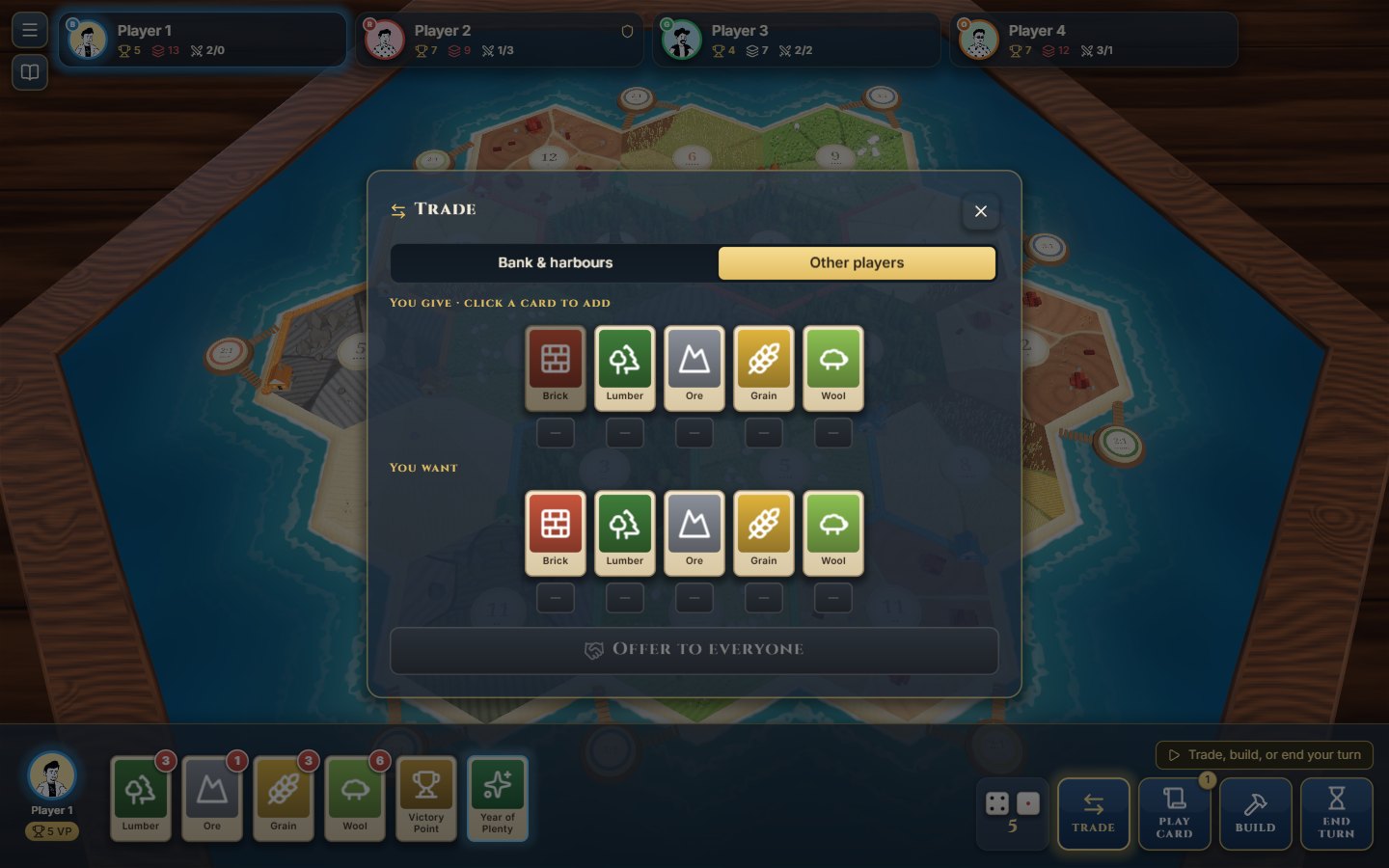
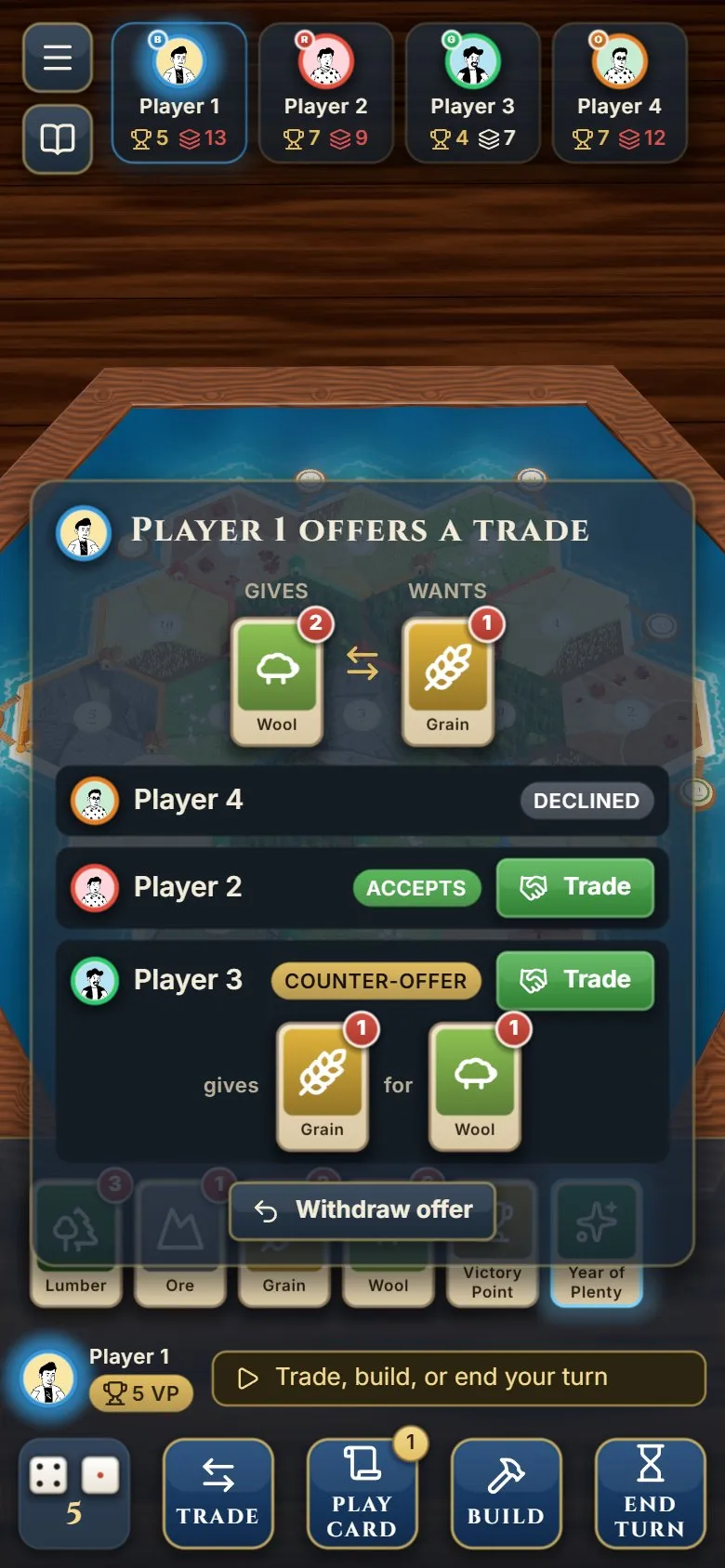
Trading. Trade with the bank at 4:1, or at 3:1 or 2:1 through your harbours. Or offer a trade to the other players: each of them accepts, declines or makes a counter-offer with terms of their own, and you pick whom to trade with. Nothing changes hands until you do.
 |  |
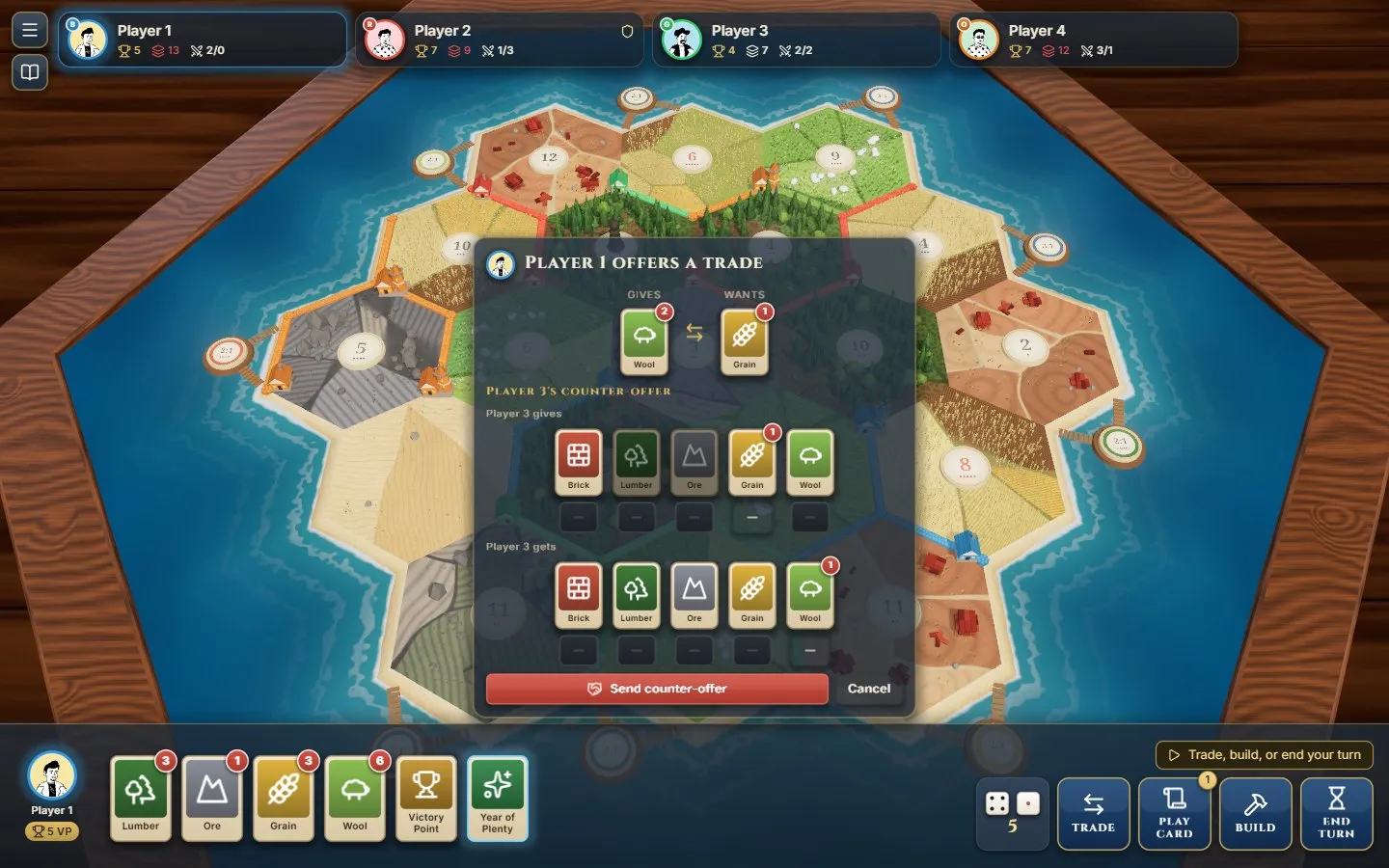 | 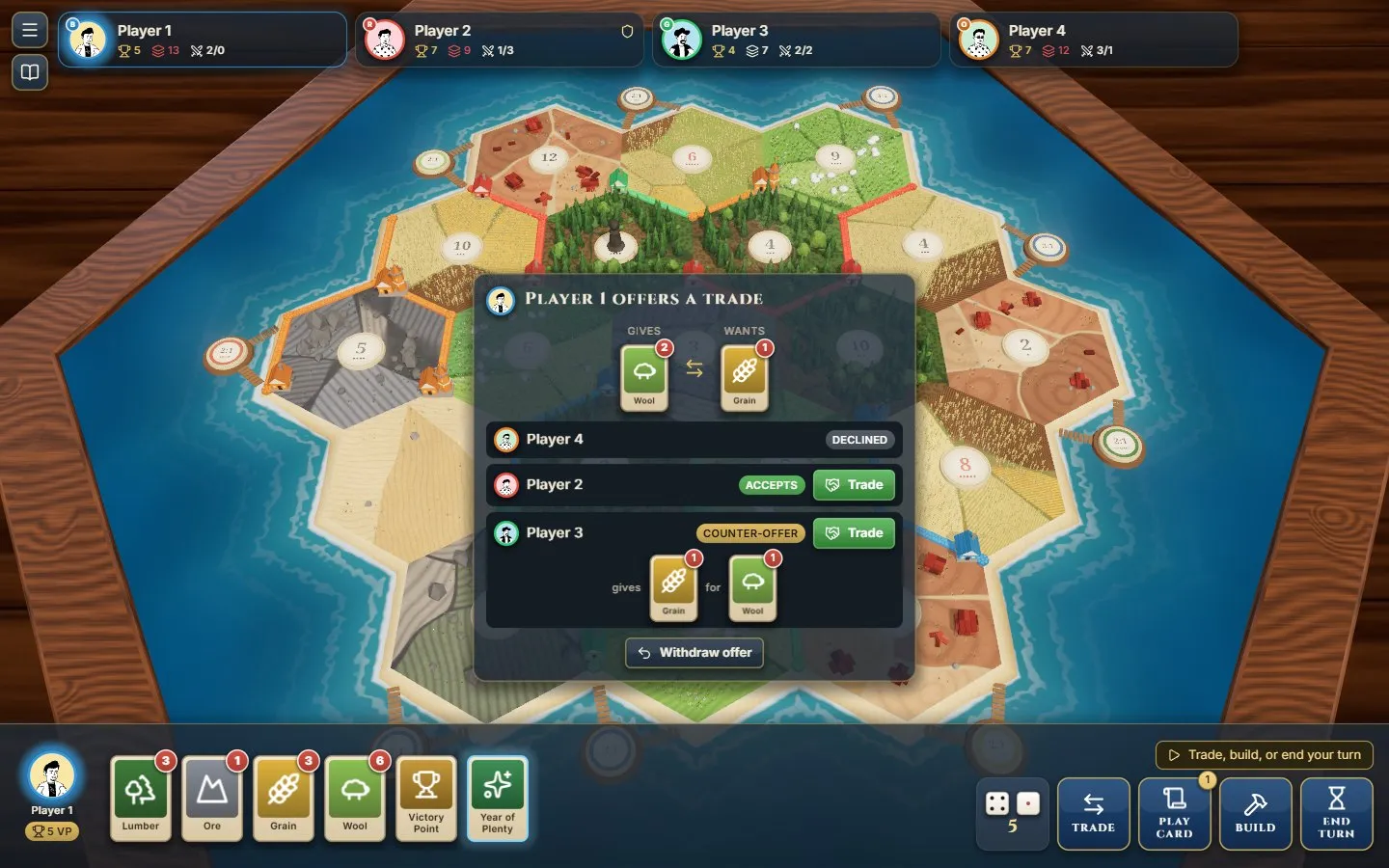 |
| A counter-offer starts from the offer turned round; here, the same grain for one wool fewer. | One player accepts, one counters, one declines: the offerer picks. |
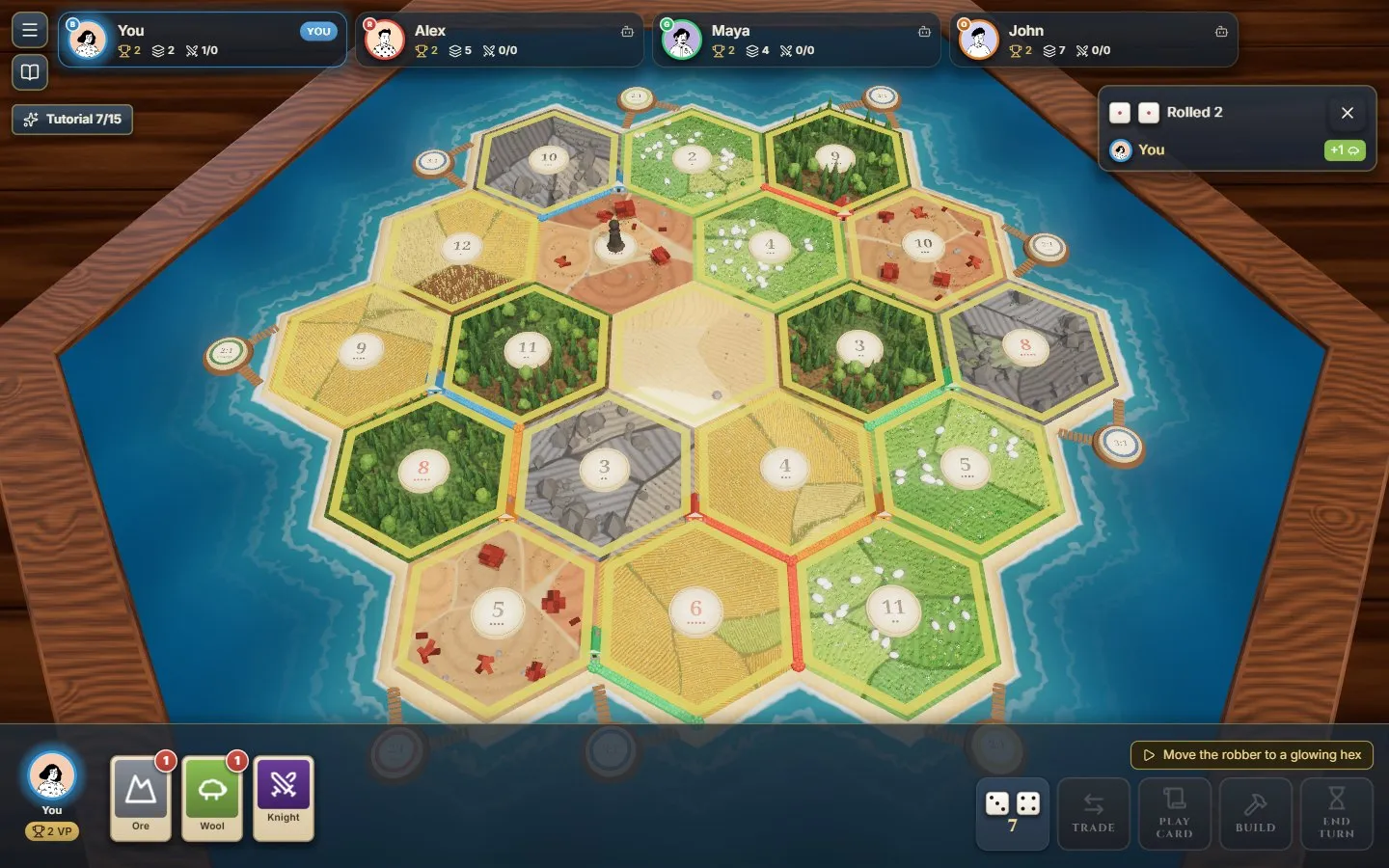
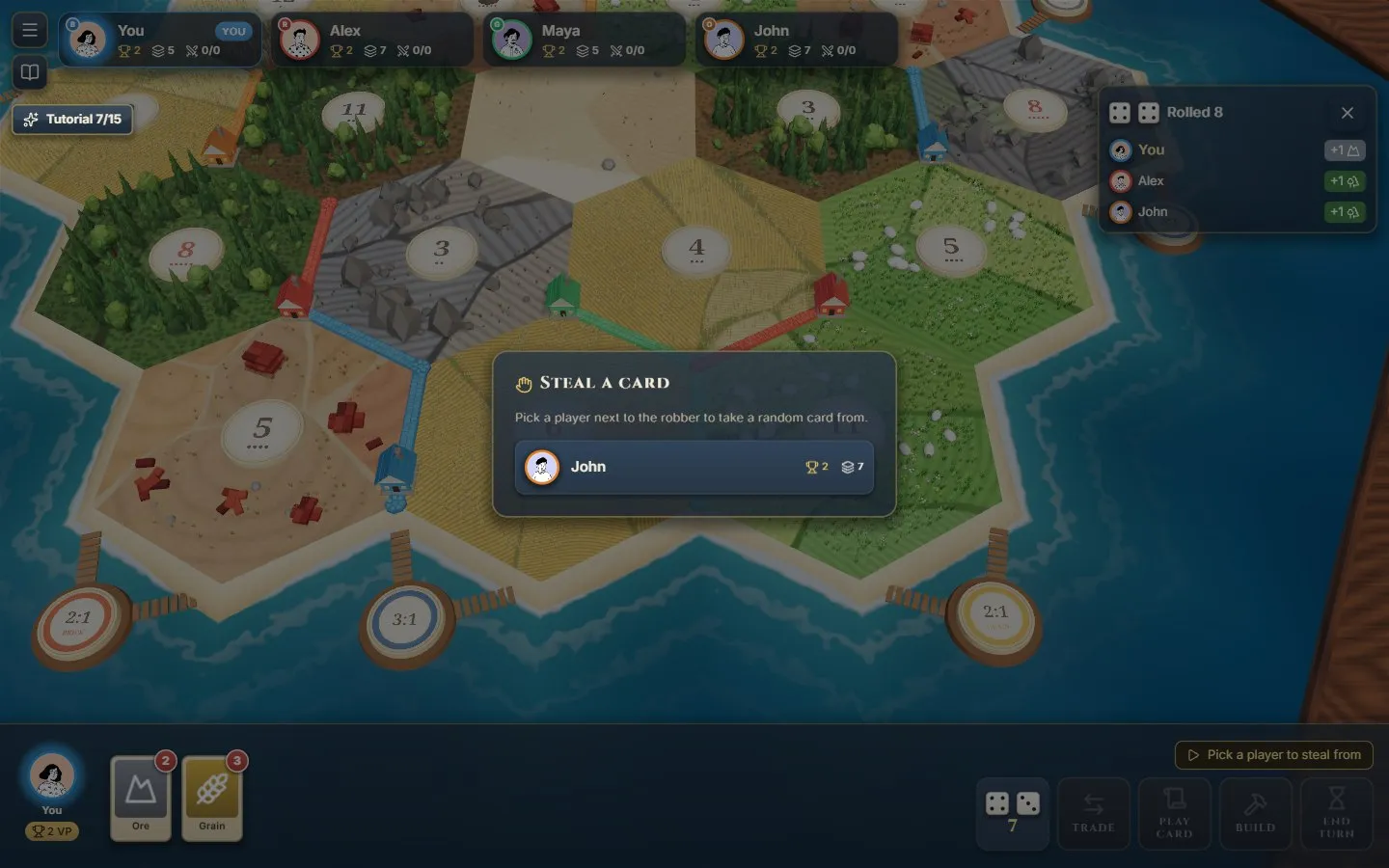
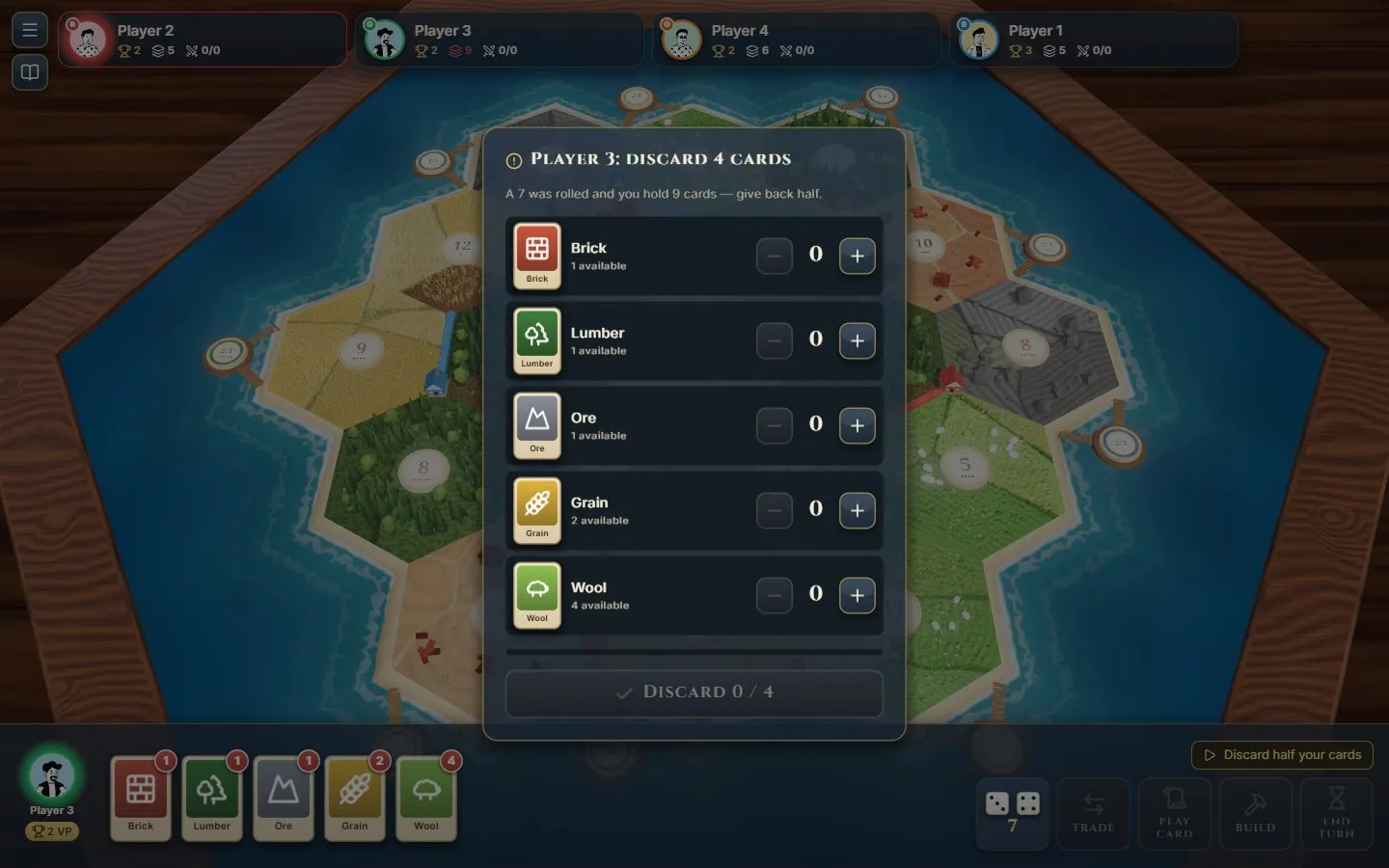
The robber. Roll a 7 (or play a knight) and the robber moves: the tiles it can go to glow; then pick whom to rob (with only one player there, you rob them straight away). Anyone holding more than seven cards gives back half.
 |  |  |
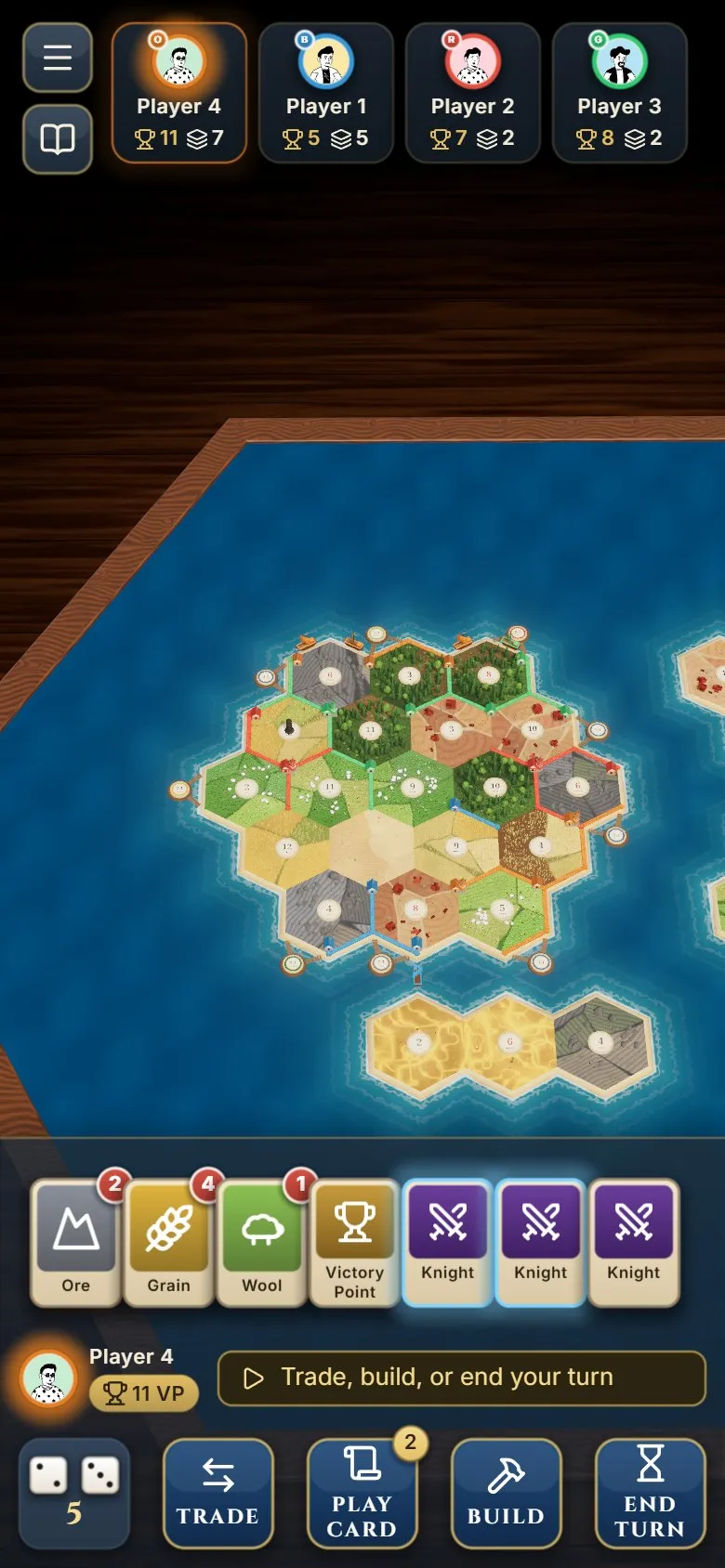
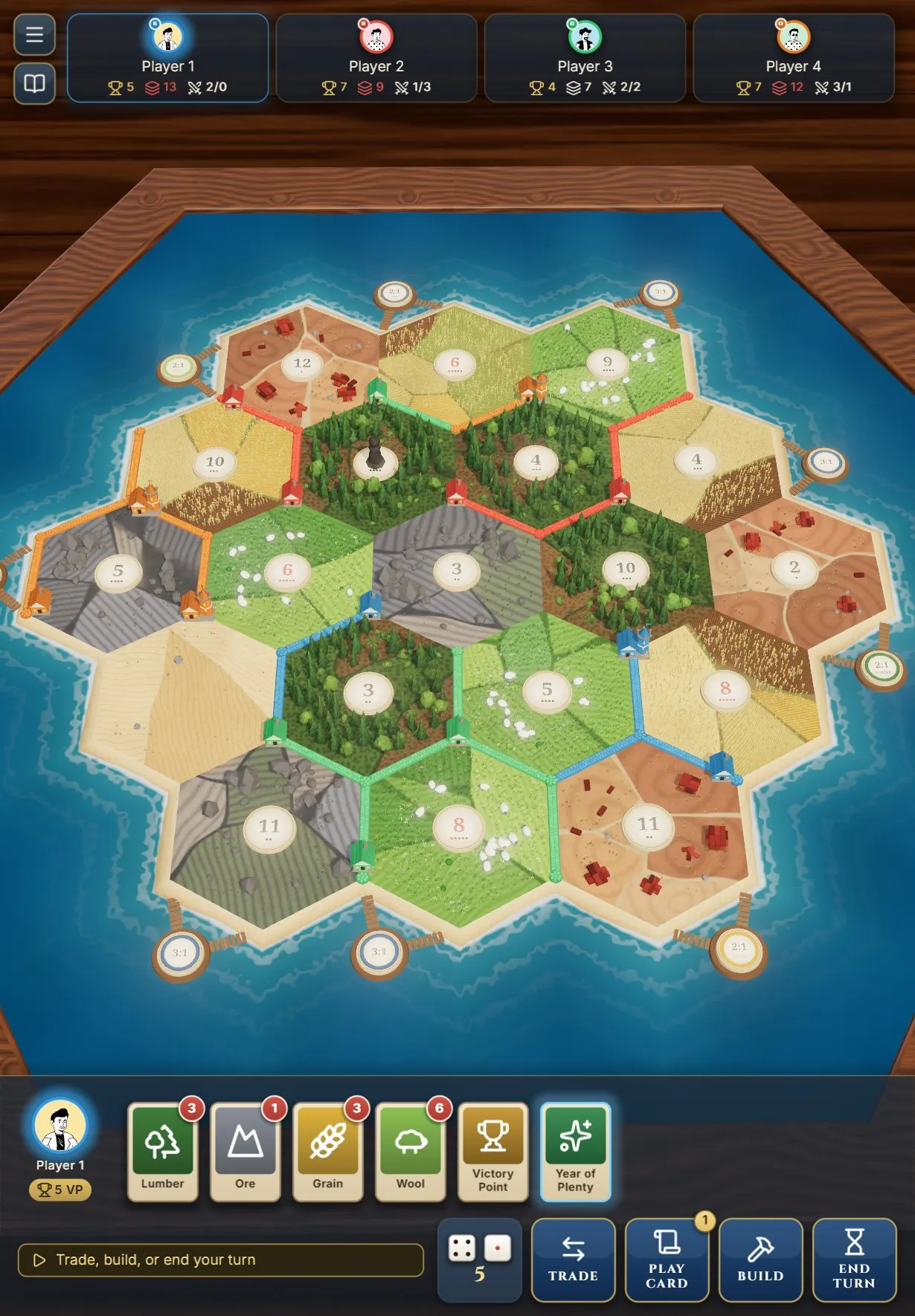
Development cards. Buy them from the build menu; knights, road building, year of plenty and monopoly are played from your hand (from your next turn), and victory point cards count towards the win.
Other players' turns. When someone else builds, the camera goes to look, then comes back.
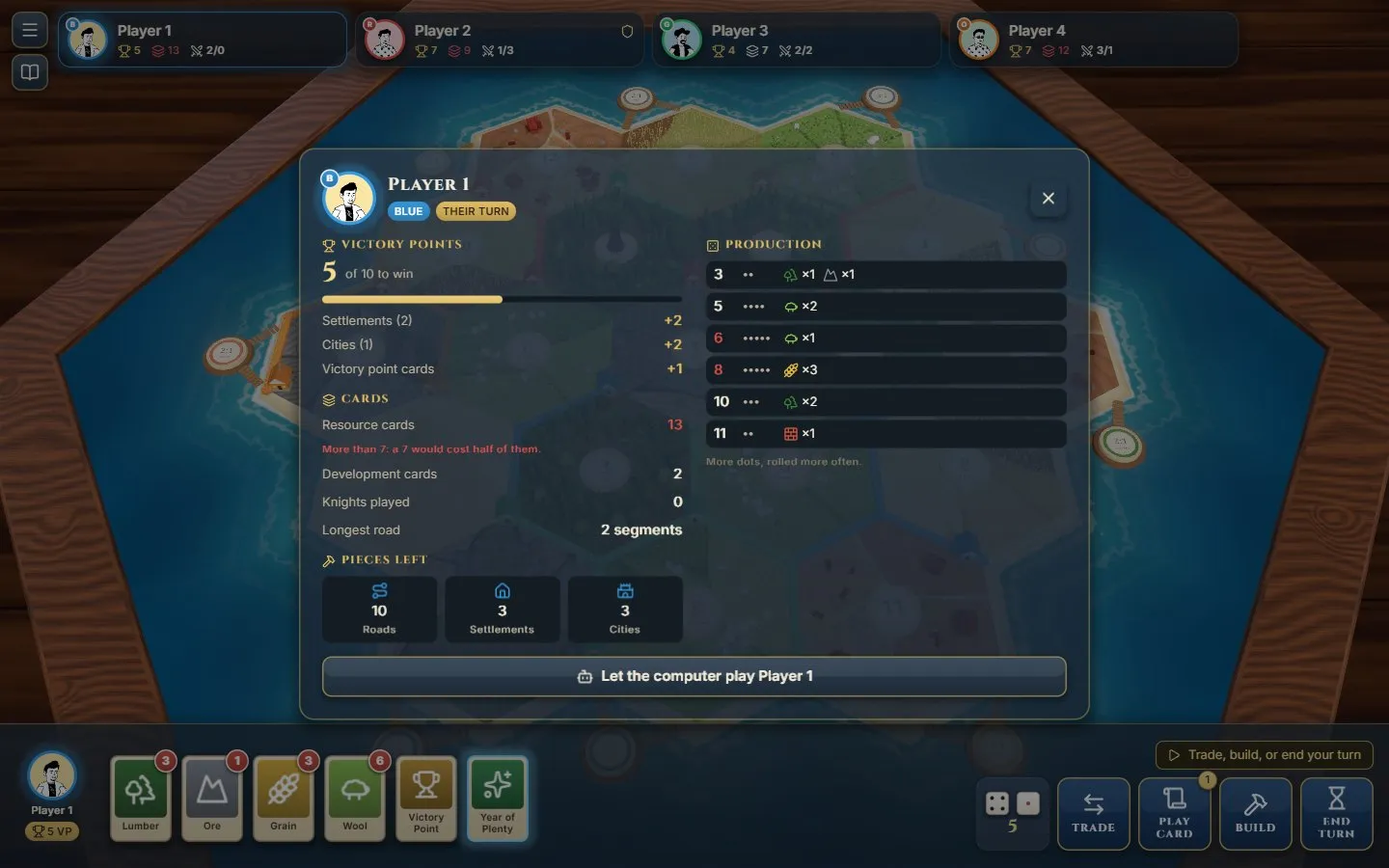
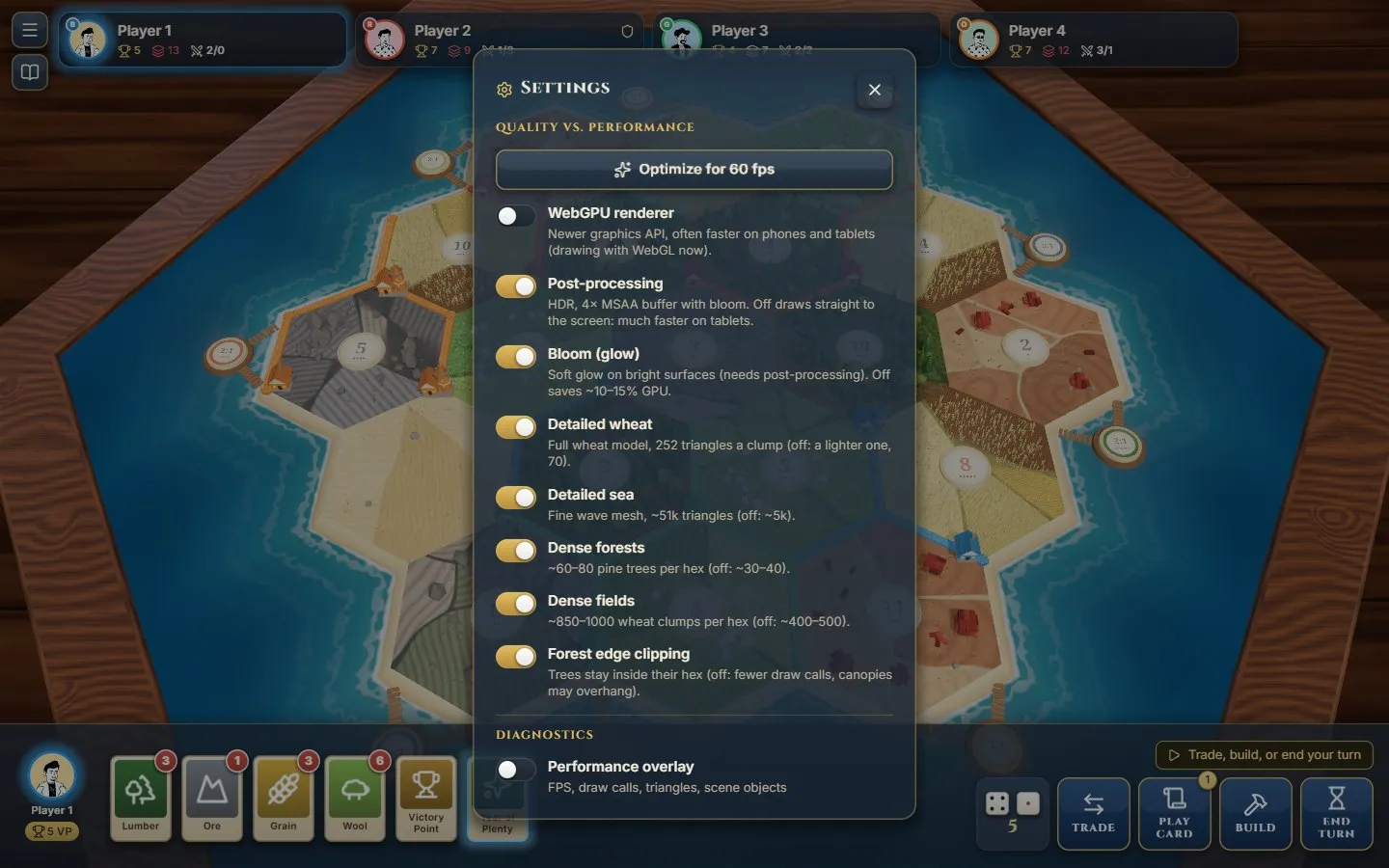
Tap a player to see where their points come from, their cards, the pieces they have left and what each number produces for them; the settings let you trade detail for speed on slower devices.
 |  |
A few turns later:
Playing online
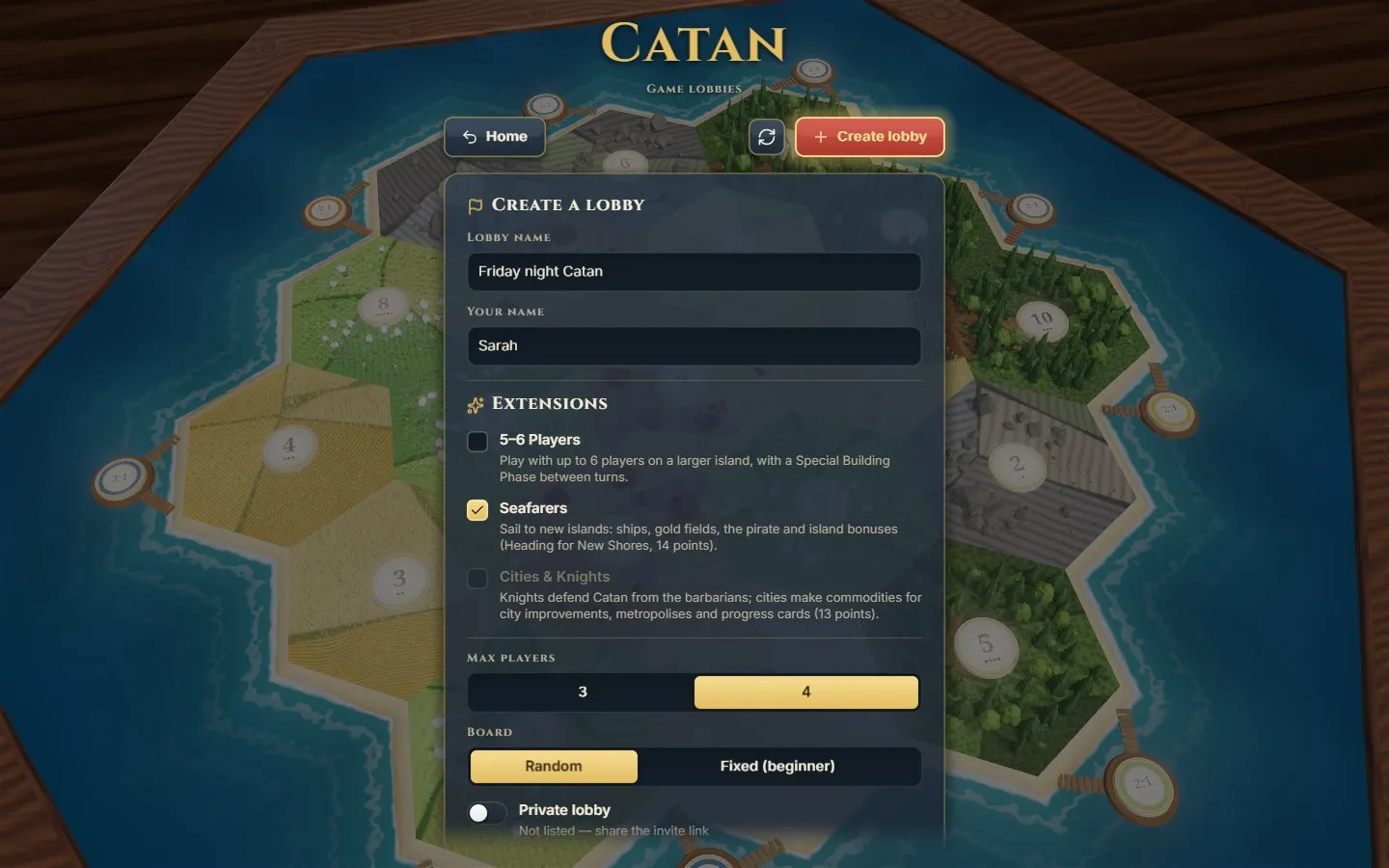
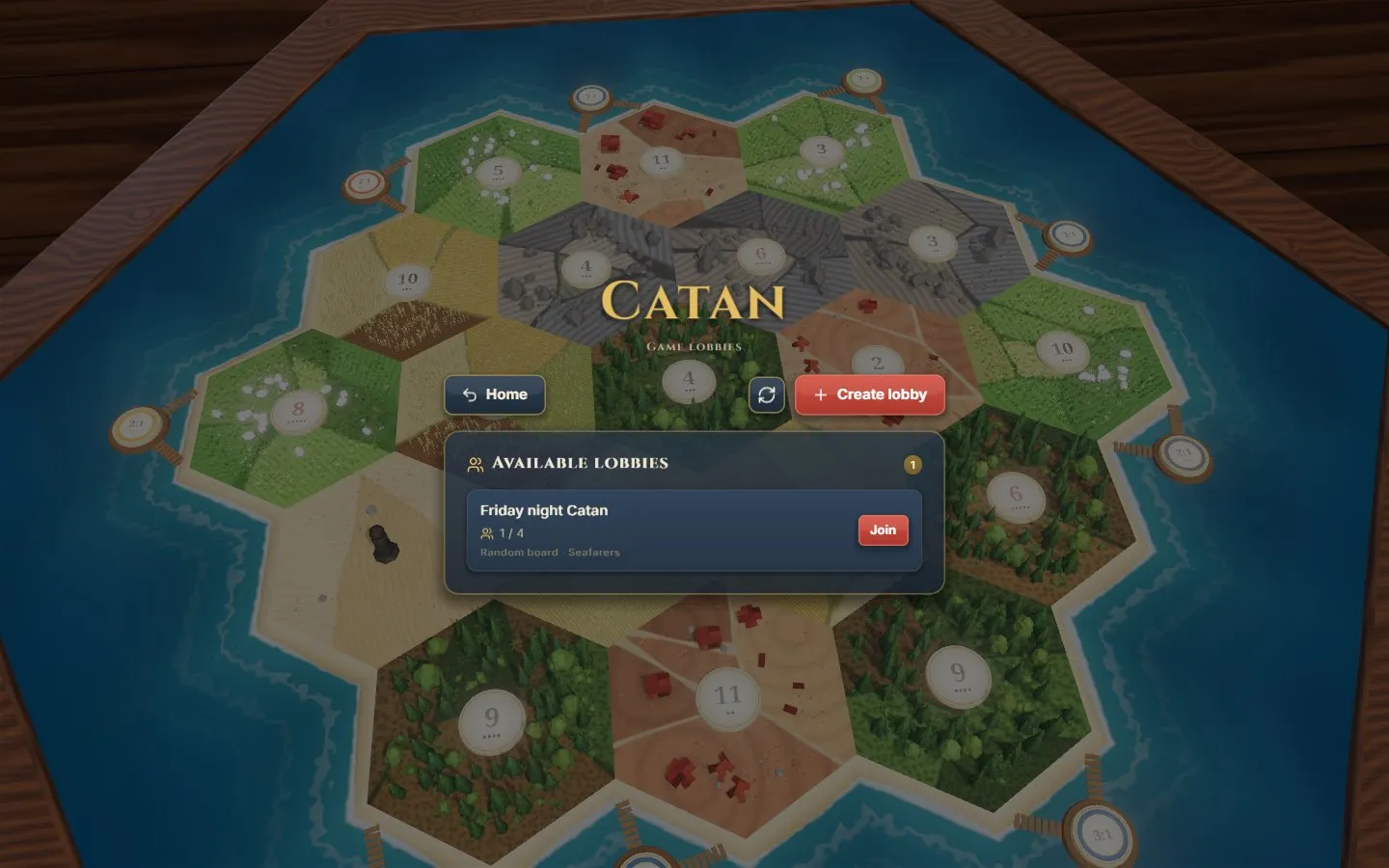
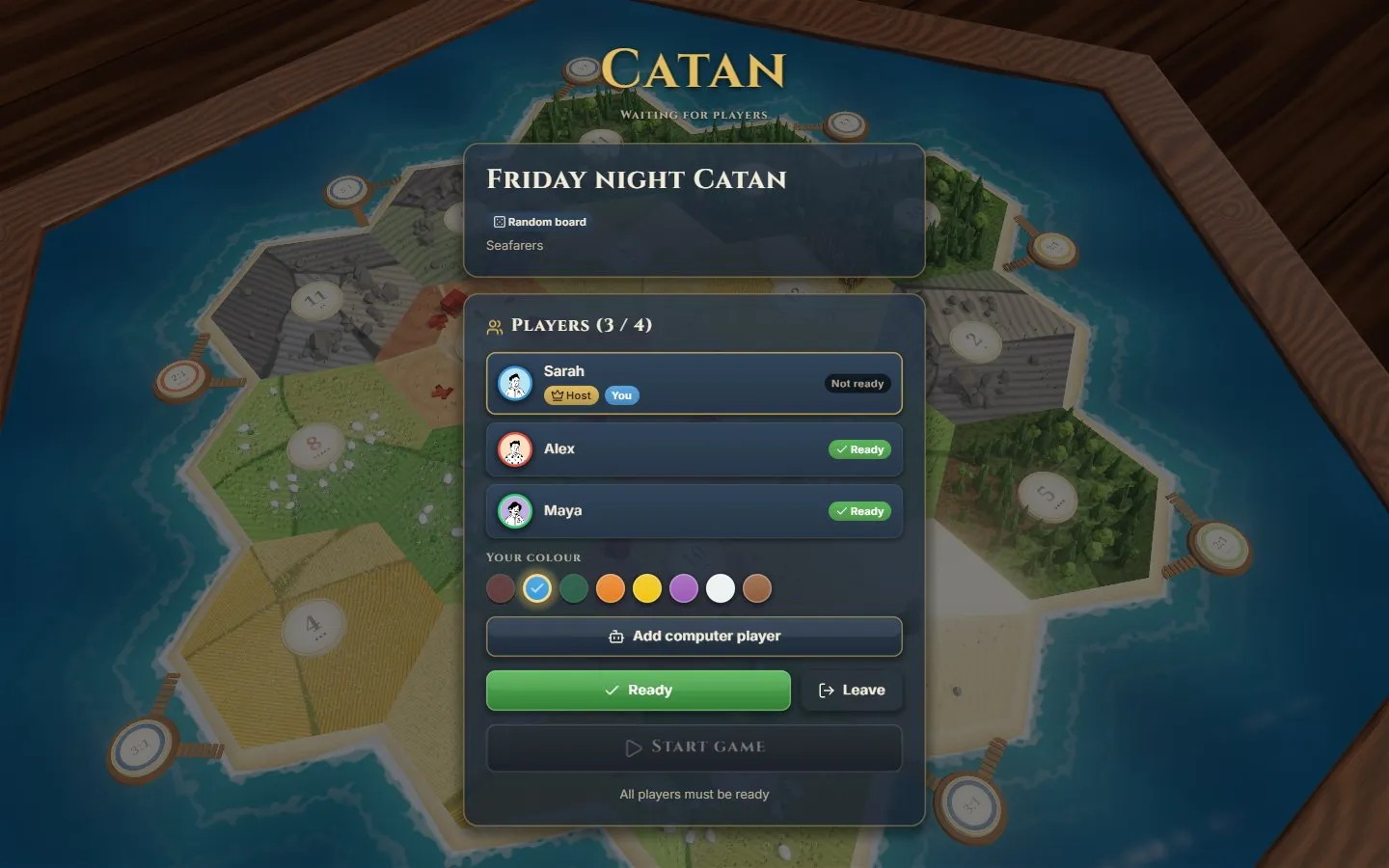
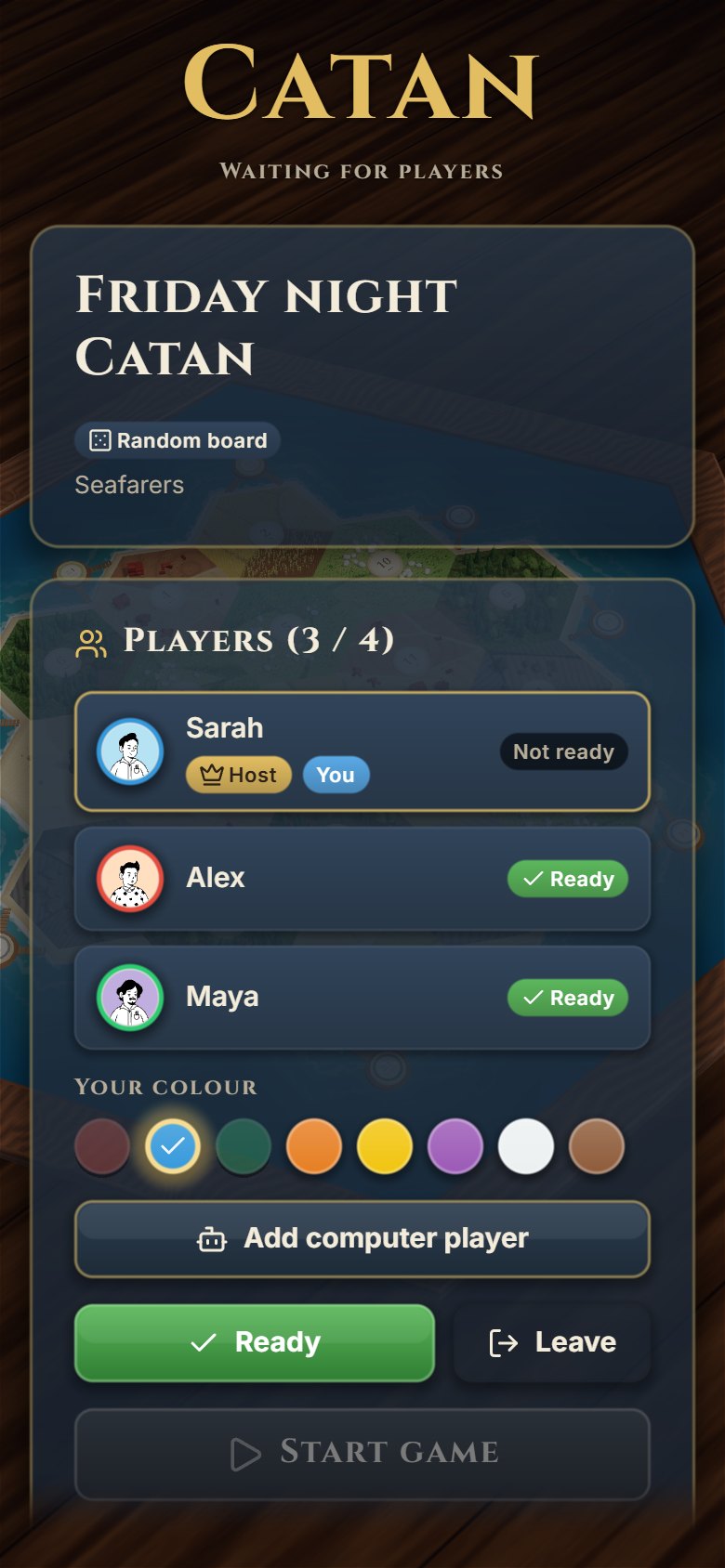
Create a lobby (public, or private with an invite link), choose the extensions, and share it; friends join from the lobby list, everyone marks themselves ready, and the host starts. The game runs on the server, which shows each player only their own hand.
 |  |
 |  |
The extensions
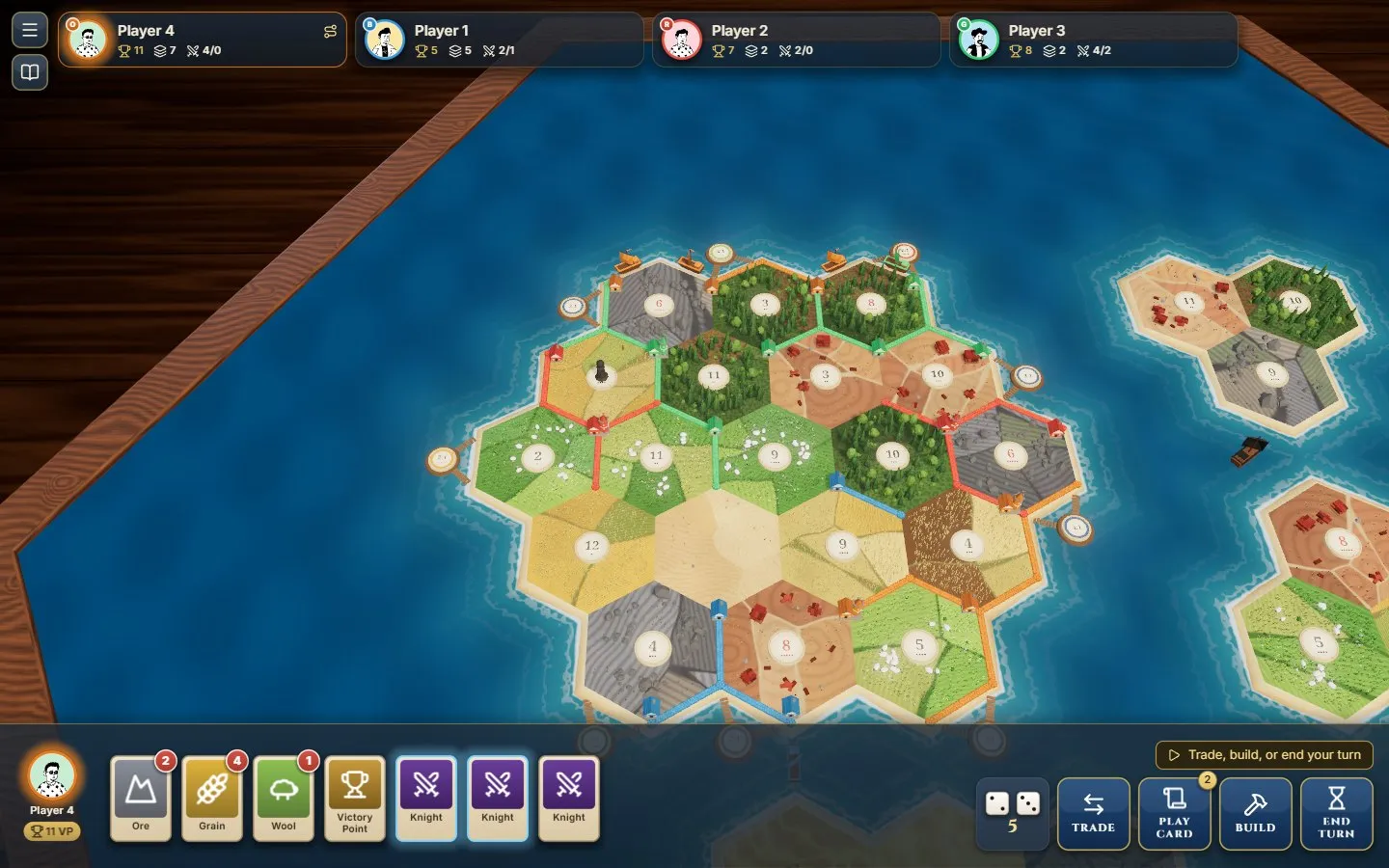
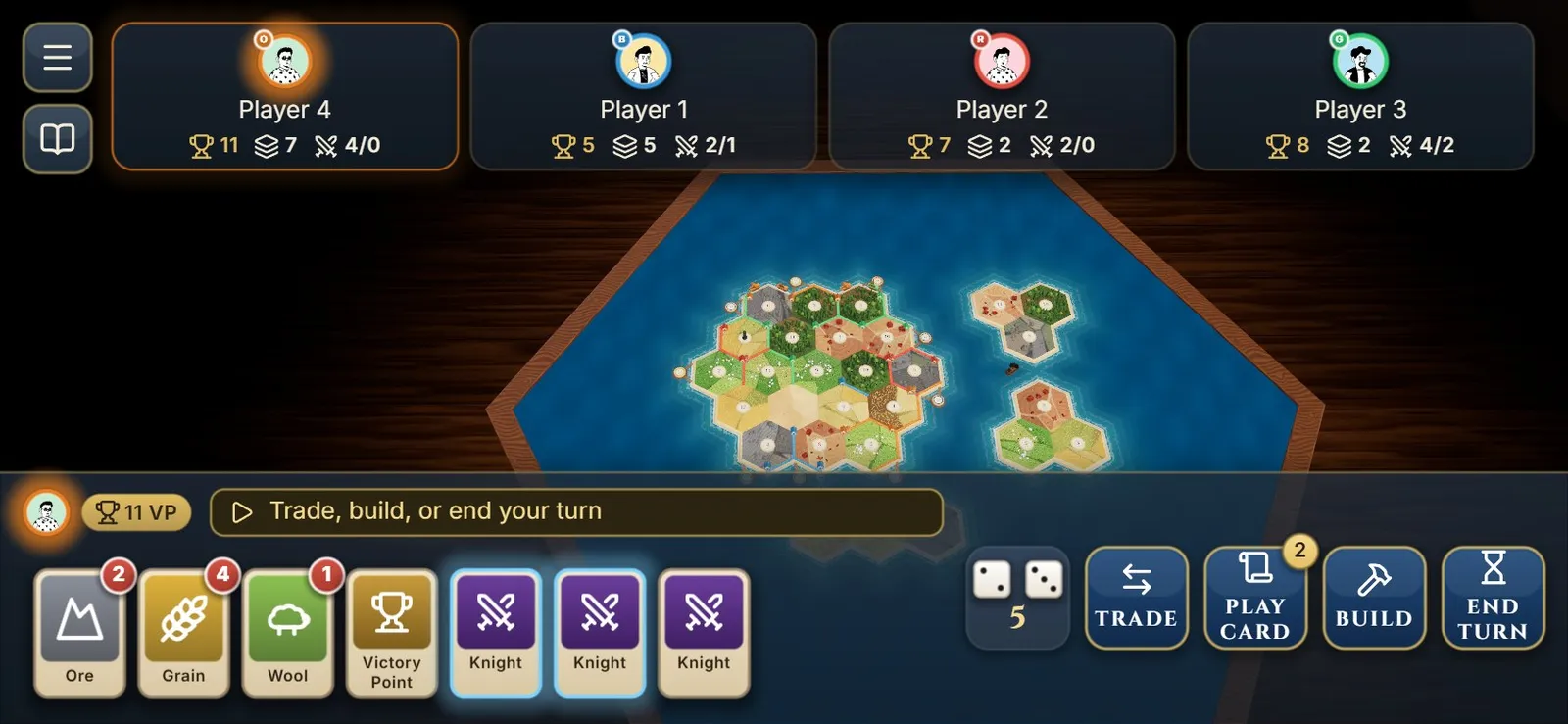
Seafarers — the island is surrounded by sea with more islands to discover: build ships, settle new shores for bonus points, dodge the pirate, and mine gold fields that pay any resource. 14 points to win.
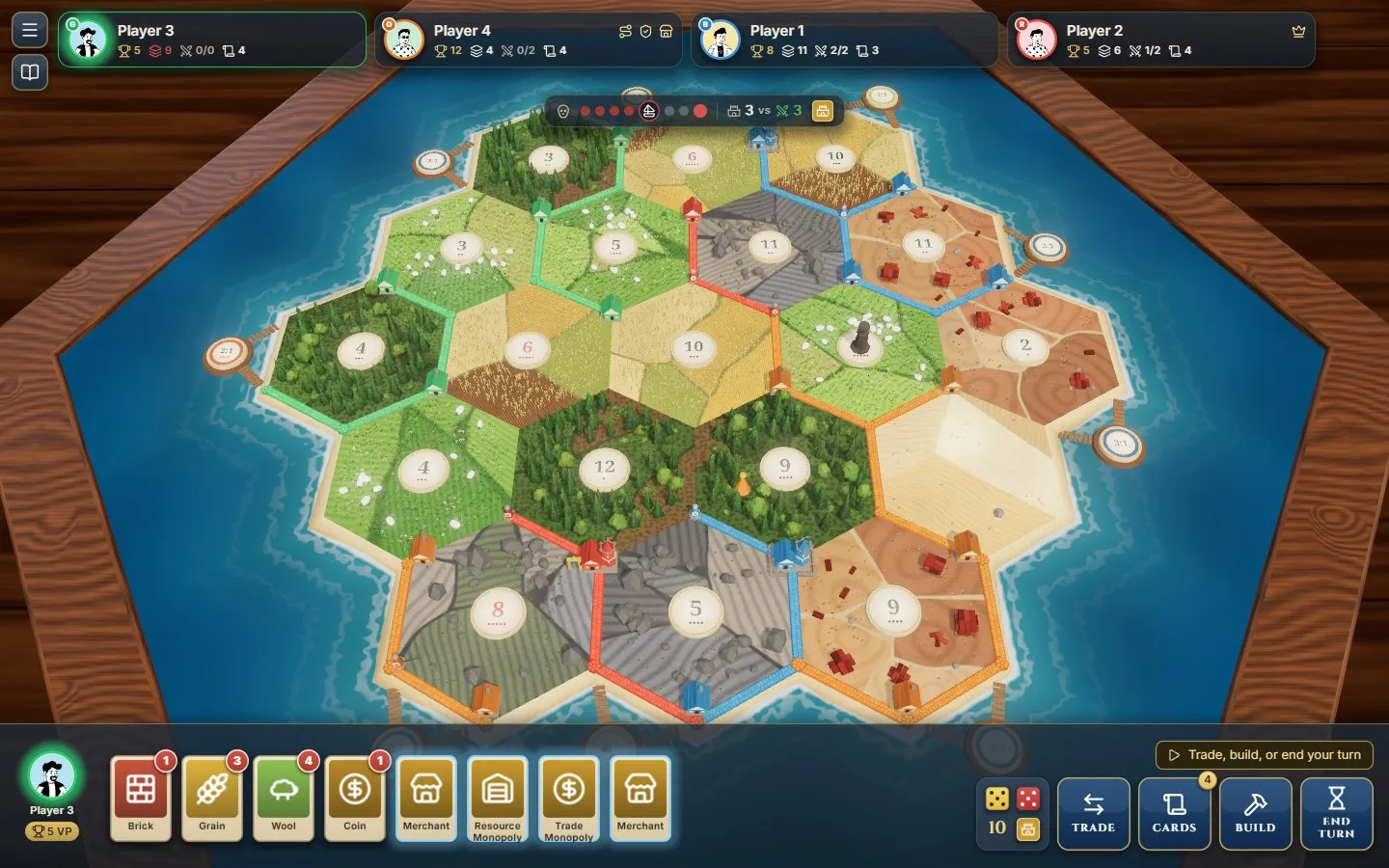
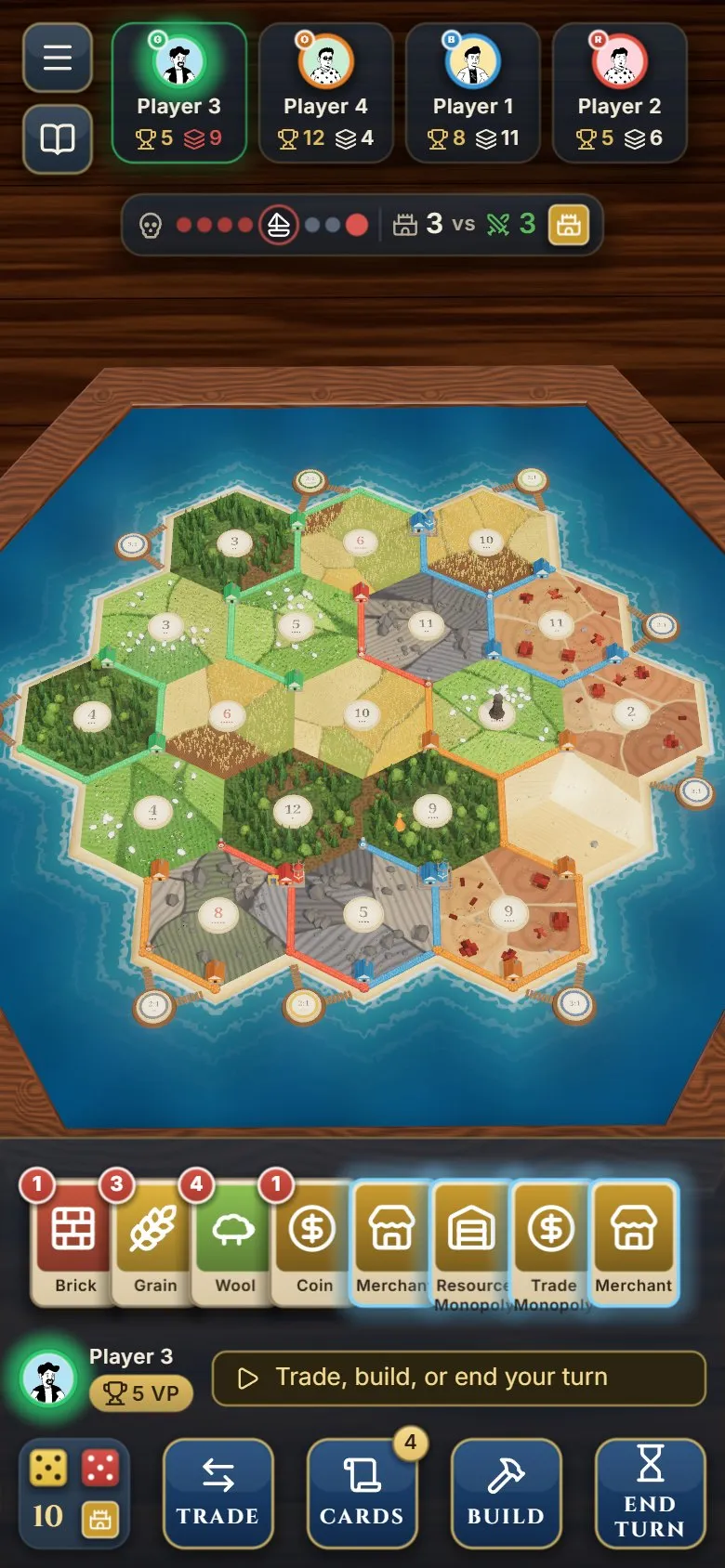
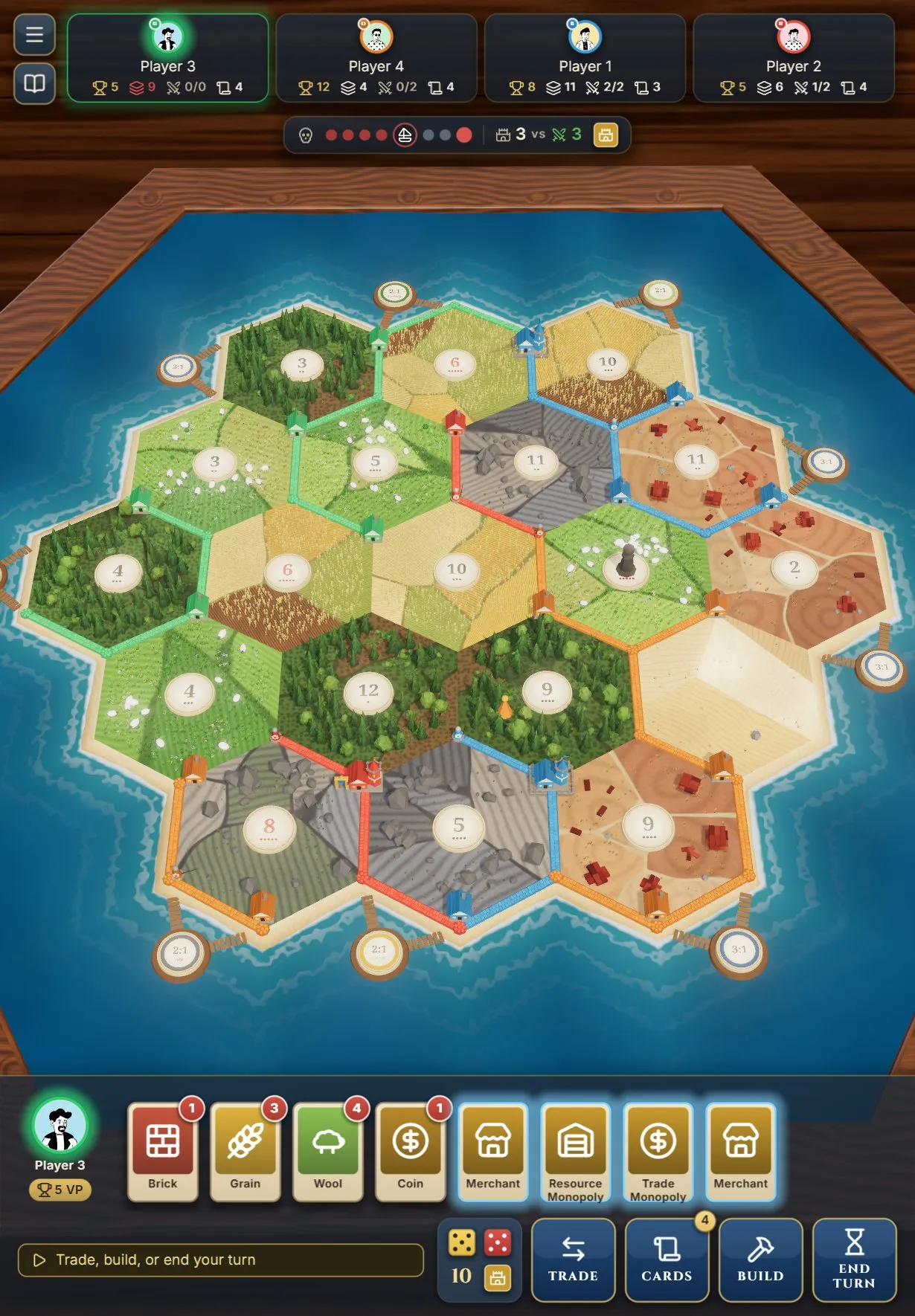
Cities & Knights — cities make commodities (paper, cloth, coin) for city improvements and metropolises; knights defend Catan from the barbarian ship on its way (the track at the top); the event die hands out progress cards. 13 points to win.
 |  |
5–6 Players — a larger island for up to six, and a special building phase between turns so nobody waits too long.
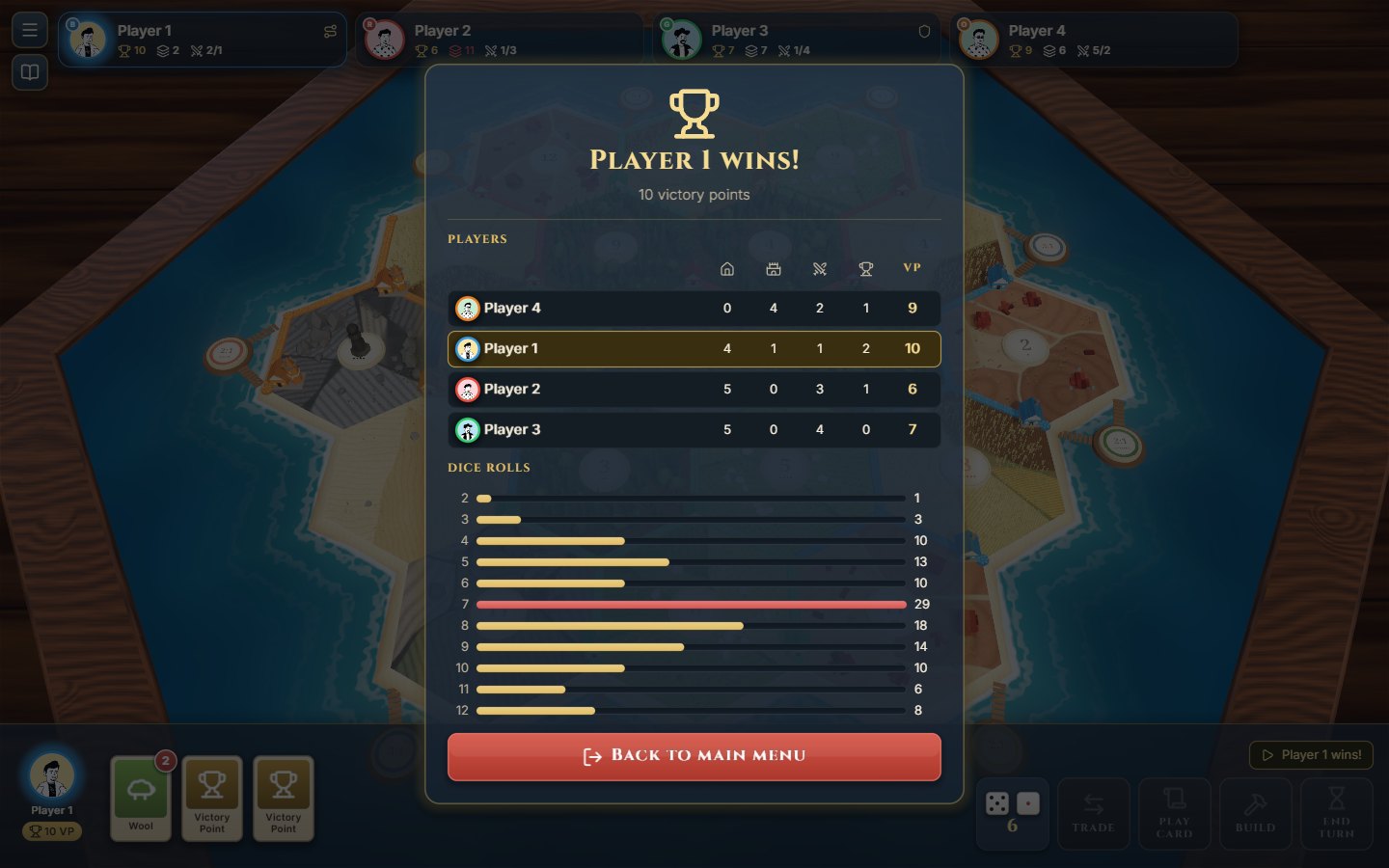
The end of a game
The first to reach the target on their own turn wins; the final screen shows everyone's points, pieces and cards, and how often each number was rolled.
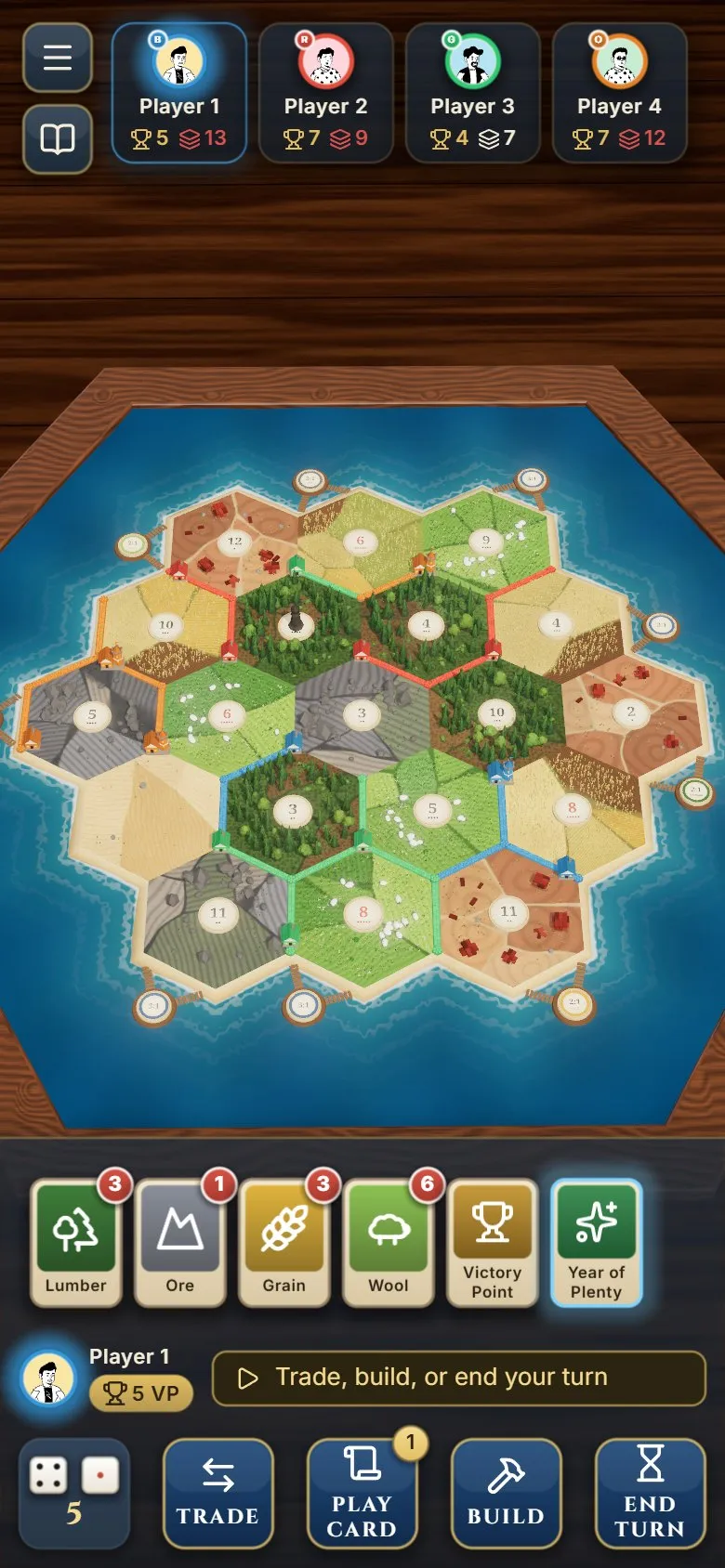
On phones and tablets
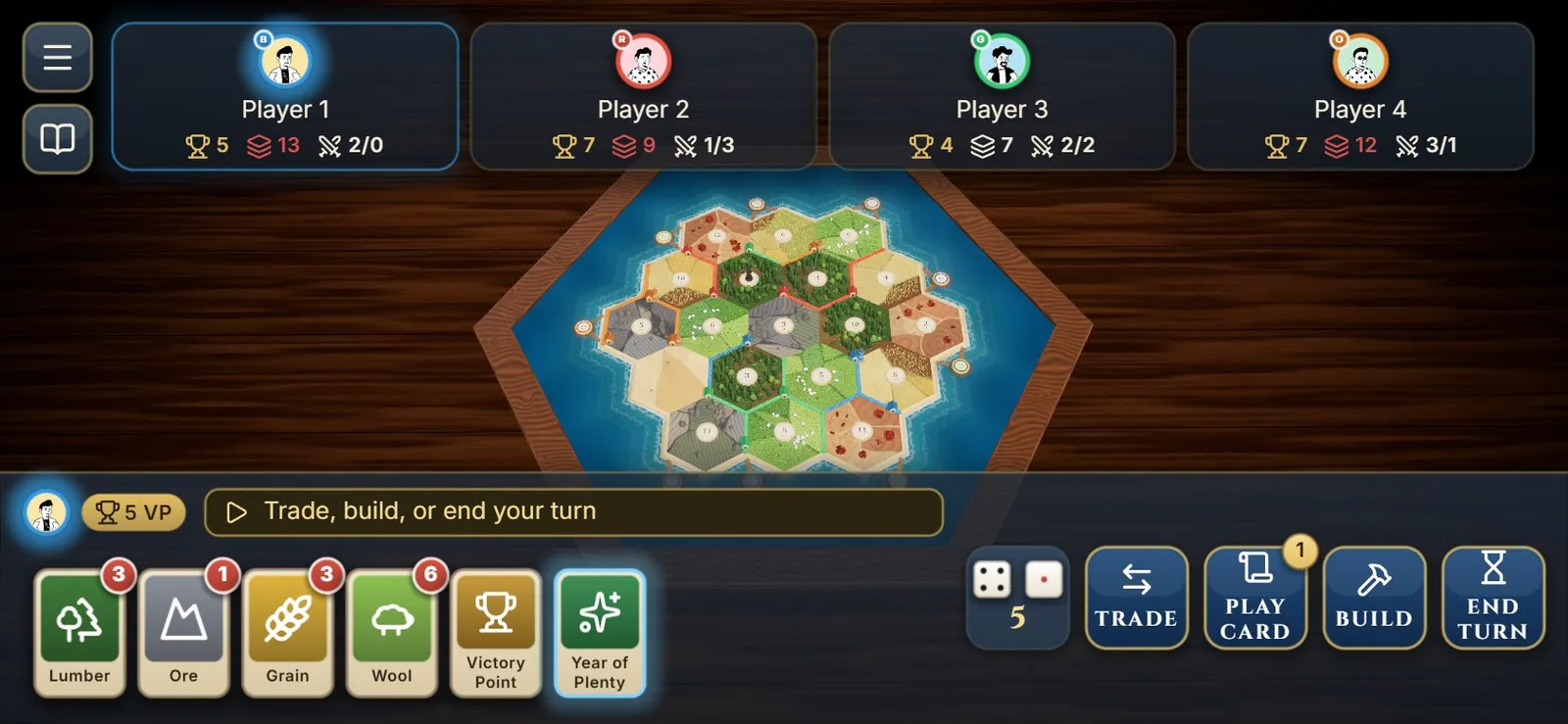
On a phone the board takes the whole screen: the players line up along the top, your hand and the actions along the bottom, and panels open over the board. While you pick a spot on the board, the hand folds away to give the island more room.
 |  |  |  |
 |  |  |  |
Turned sideways, the bottom panel shrinks to a single band:
 |  |
On a tablet:
 |  |  |